Management Economics (inside firms)

Economics not only helps to understand how markets work, but also applies to understanding situations that are totally outside the marketplace, where buyers and sellers are not independent autonomous actors, making decisions pertaining to their own private property and their own welfare. These situations are generally described as the ‘economics of group behavior’, where there are often informal or formal rules set up that govern acceptable economic behavior. We are particularly interested in behaviors inside one kind of group, the firm. How do we know that resource allocation is working properly inside the firm? How do we keep resources working effectively and productively? In competitive markets, these kinds of “problems” would give rise to high costs and failure of the firm.

In situations where firm failure isn’t likely, where the firm has monopoly power, poor productivity only results in wasting profits. The economics of Management provides some guidance on how to keep resource allocation optimal and efficiency high inside of organizations. And, the understanding of how decisions are made help us understand the nature of incentives imposed on managers, and the kinds of reactions we can expect.

The “firm” is a collection of economic activities (people doing separate jobs) that could have been done independently, and the output of all that work traded on markets (like outsourcing does, when we shed an internal function and “buy it” on the open market for such services). But, the firm is nothing but a collection of such functions, welded together by “management”.

Why do firms exist? Because an owner (plus other investors) believed that there would be a worthwhile return on investment if a bunch of separate economic functions were pooled together inside an organization and managed with the output being sold to someone. Essentially, the “firm” represents a collection of part of the supply chain for some product or service. Why would one believe that doing all these functions “off market” would be able to “beat” the market in terms of efficiency? In simple terms, because the transactions costs of using markets can be largely avoided if the specialized functions can be managed in a non market environment. Transactions costs include shopping to find the right suppliers, finding customers, negotiating, waiting, getting information you need, and lots of other things. The transaction costs of doing business in markets is often high. Witness the way bookstores and other retailers went out of business because of Amazon and other internet companies. By making shopping for books more convenient Amazon proved that many book buyers don’t want to spend their time browsing before buying, they just prefer to spend less time, with less inconvenience, just going on line and browsing there and buying what they want. Transactions costs used to be high for buying books (drive to Harvard square, park, look here, ask questions there, and 2 hours later I am back home). Amazon proved just how expensive the market transaction costs of shopping actually are. They made a nice business by offering a business model that vastly reduces consumer transaction costs.

Back to the rationale for a firm in the general sense. A firm’s business model is to bring together

(1) a set of target customers whose unmet needs are known,

(2) a product/service that meets those needs, and

(3) a production process that is composed of carefully integrated and standardized functions that can economically produce that product/service and get it where and when the customers need it.

So, a firm may bring together 100s of special business functions (such as product development, testing, painting, assembly, packaging, selling, customer relations, advertising, lead generation, billing, financial analysis, shipping, employee recruiting, etc etc etc.)

All of these and hundreds of others could’ve been purchased in markets from venders. But, the firm was formed by bringing together people with these skills, financial resources, a space to operate (or a virtual space) and a management team. Management’s job is to make an efficiently functioning team to meet the customer’s needs. They put a fence around these people, isolating them from the markets for all the vendors who perform the same functions on open markets (eg marketing consultants, billing services, outsourcing companies who do some of these things, employee evaluation specialists, and all the others). Firms are groups of people, working under the guidance of management, and isolated from markets.

So how does management coordinate all these functions and get things done efficiently, on time, and up to quality standards? What ensures cooperation when management asks employees to do it for the benefit of the business? What ensures that employees will work hard and effectively when maybe some of them are more interested in having fun or shirking duties in some way? What ensures that management itself will guide the firm in a direction preferred by the owners (residual claimants)? There are three kinds of issues about whether the firm business model will work to provide a reasonable return to the owners:

  1. Which direction will management take the firm? Is this what owners want? What can owners do to get what they want?

The separation of ownership (stockholders) and control in corporations is a longstanding issue. Of course, in small businesses, there is no separation at all, because the owner is likely the manager. In The Modern Corporation and Private Property (1932), by Berle and Means first set out the issue. In the corporation, managers, not owners, have control. Absent interventions, managers will maximize their own interests subject to keeping the owners happy enough to keep them in their jobs. Absent interventions, managers will not optimize the interests of owners. Basically, modern thinking is clear if you look at the way managers are compensated today. Managers are paid a salary, but it is minor compared to other forms of compensation, much of it contingent on profit performance of the firm (including bonuses and stock options). This essentially creates incentives for managers to act “like owners” would act. With lots of stock, the managers are, in fact, owners too. This essentially “aligns” the interests if Ownership and Control in the corporation. Now, such incentives are often pushed far down in the management structure of corporations.

  1. The second issue is getting cooperation inside the organization.

Cooperation is something that is needed in groups of any kind, because their point is to bring together people with common interests to get something to happen. The business is a unique kind of group. It brings people together, but their relationship isn’t social, nor do they have common interests, they are there to earn their piece of the economic pie for themselves and their family. Why are they even in a particular firm? Because the benefits of being there exceeded the benefits of their next best alternative (opportunity cost). What are those benefits? It may be purely a higher salary that got some of them there. It may be the better fringes or a particular fringe that caused others to say yes (in this case, these persons may have actually given up a higher salary elsewhere to come). It may be the convenient location (again, they may have given up salary to be nearby). It may have also been the prospect of a better career potential in this firm than the next best offer (again, they may have been willing to give up salary now, to have better salary in the future). Whatever, we are likely to have a “group” in any firm that is diverse in many dimensions.

So, what is the cooperation problem? People do not shed their personal objectives when they take a job, indeed the job situation is a vehicle for achieving many personal objectives (income, recognition, social, etc.). So, when management tells them to “cooperate” in some way, it sometimes (not always) sets up a situation where the benefits of doing what management prefers are contingent on what the other person does. This “interdependence of interests” is endemic to group activity. Lets use an example: What if a firm sells two products to the same customers (say men’s clothes, women’s clothes) and has two different managers charged with sales management. Their manager requests that they share business intelligence-type information on a big customer (say Neiman Marcus). will they fully cooperate just because the manager asks them to? What determines if they will fully cooperate with each other to adhere with management’s instructions?

Are their interests aligned with the interests of the firm (the request by management). There are many possible answers to this depending on the people involved. But, it is common in the workplace for the interests of the individuals involved to prefer to not cooperate. The situation is illustrated by the simple model of the prisoner’s dilemma. Basically, it describes a situation where (1) both parties can get the best results for themselves personally if they both cooperate with management’s directive, (2) both parties get the worst payoff personally if both of them fail to cooperate, but (3) each of them will have an incentive to not cooperate, and they wont. This is because when they think about their decision, regardless of which assumption they make about what the other person will do (cooperate, not cooperate) they will individually get a better payoff if they don’t cooperate. To illustrate, the table shows how the situation looks from my perspective. It creates an incentive for me to fail to cooperate. Because, i am better if regardless to Tom’s behavior if i take the position of failing to cooperate. If the situation looks like this to Tom, then we have a prisoner’s dilemma.

If Tom cooperates If Tom fails to cooperate
My payoff if I cooperate      100

I do well if we cooperate together on info sharing

         60

I don’t do well cooperating when Tom doesn’t, he may be able to use my information to swing the buyer his way. Maybe he’ll get the next big promotion, not me.

My payoff if I don’t cooperate        120

I do even better because I get benefits from his information and he doesnt get mine. Maybe I will use Toms data and be able to get the next big promotion.

         80

If we both fail to cooperate we do less well than if we had cooperated

The situation arises all the time, when one person’s interests depend on the actions by other people. What if I am asked to come in and help the team write the proposal on Saturday. Do I cooperate, or not. I may see the issue as better for me to not do it, whether Tom does. And, also better for me if Tom does not. What if I am asked to “work together” with another division manager in hiring temp typists from the pool of people we have available. There may be a good outcome for each of us for cooperating, but we may “pass” because as we each see it, regardless what we assume about what the other person will do, we are better off not cooperating.

So how can we resolve prisoners dilemmas, or other kinds of “interdependent” situations inside organizations? The obvious ways are:

  1. Hire tough managers, who don’t give flexibility to delegees (‘my way or the highway’ managers)
  2. Provide some sort of incentives to cooperate
  3. Discourage independent decision making by the parties— make them decide together, or maximize the communication between them so they are not speculating about what the other is doing or thinking

The point here is that it may be tough throughout the firm to achieve the desired benefits for the firm by getting people to work together in groups. The efficiencies of the firm are, to some extent, determined by how well people work together when their personal payoff depends, in part, on the actions of others. Obviously, situations of personal rivalry (“which of us is going to get the promotion”) are deadly without one of the solutions noted above.

The problem gets much bigger in more than 2 person games like this. The problems of “interdependence” of results for separate parties was mainly developed by RAND people trying to figure out what the cold war would result in. What were the incentives for the USA and the USSR to fire first, or not fire first. Obviously, the answers depend on what we assume about the assumptions we make about the other guy’s incentives and related behavior. The John Nash equilibrium (the scientist in “A Beautiful Mind”) shows how such a dilemma, played as a game many times (allowing players to learn how the other person chooses), will always result in a non cooperative strategy by both parties (not good).

3.  A third problem of interdependence of outcomes inside firms is abusive consumption of “common” or “free” services. This is the same problem that exists in society at large with “free” public services (roads, parks, clean air, clean water, etc.). Inside firms workers (and the managers) have access to ‘common’ services (office space, free food or refreshments, phones, computers, space for parking, others). People in the company and their departments and business units do not have to “buy” such services from vendors because they are made available by the company. The problem with “common services” is that the demand for them reflects the price paid for them by users. If the price is zero more people use them. And, their volume of use by every decision maker reflect good incremental decision making: if the amount I have to pay for an increment of service is zero, then I should continue to consume it until the incremental benefit is zero. So, the problem with “common services provided to a group for free” is that the usage will tend to be very high. This is the “tragedy of the commons” discussed in the text (but not in the PR textbook). Roads are cluttered. Water is overused and often becomes unclean because of usage patterns. Air too is not private property, so nobody can charge for using it. So, guess what, it is squandered as corporations are not charged for using it up by replacing it with polluted air, and drivers are not charged for doing the same thing. The economics of the environment is basically a story about how the lack of private property for many environmental resources has led to overuse because the price is too low (zero).

So how to fix these problems inside firms? (or elsewhere)

  1. Charge fees for using the resource (make departments pay for their space in calculating their P&L or their contribution margin using some sort of fee or transfer prices). Charge tolls for roads. Charge taxes to buy gasoline.

Inside firms, the problem usually arises because departments or business units try to get more than their share of “free” corporate services (borrowing consultants from another department, using common space for meetings, getting corporate PR department support for particular publicity programs, etc). In consulting companies this is a huge issue. How do you treat the “lending” and “receiving” departments fairly inside the company? How do you limit the “overuse of what appear to some managers to be “free” resources available in other areas of the company? Transfer pricing! You set prices on this stuff for use within the company. So, if you borrow a consultant from another group to work for a week, your budget gets charged a price for it. Or when you use common meeting rooms, you get charged for it, etc. This kind of thing limits overuse of “common” (but valuable resources that have opportunity costs).

  1. Regulate or set rules for group behavior (whether the group is employees, or citizens, or drivers). Clean air and clean water Acts are regulatory mechanisms (which businesses largely hate because to meet the regulatory requirements they have to spend money in order to not continue to replace clean resources with dirty versions of the resource). In Mexico city, where road congestion and smog are horrific) they issue license plates that are good for M,W, F and Sunday, or good for T,TH, Sat and Sunday. The idea is stop all the cars from being out and about on any given day (except Sunday). Space use standards (who is allowed what size office) and monitoring of long distance phone calling are examples of firm rule.
  2. Privatize (often associated with outsourcing inside businesses). Like our mailroom and cafeteria providers here at Simmons. In the past, services got overused because nobody was paying attention and it was free (space use by departments, coffee in the mornings, use of phones) or because of some “quid pro quo” system of corruption whereby the gatekeeper for the ‘common services’ could help her friends, who were gatekeepers of other services. So, some people got free mail services, some got free food, some get the newest computers, etc. Under outsourcing, or privatization of the function, the consumers must “pay the vendor” because the vendor has private property and is going to charge for it and not give it away free because you are a friend or someone who can offer a quid pro quo. So, outsourcing is often a way to clean up the “tragedy of the commons” and corruption inside businesses. Of course, outsourcing is also a way to (1) stop spending management resources on a non strategic business function like the cafeteria and (2) to get rid of assets on the balance sheet that have nothing to do with generating revenue for the firm—contributing to improved asset use efficiency and a “better” balance sheet.

Budgeting and Resource Allocation in the Firm

Simple decisions are subject to decision making where incremental cost is weighed against incremental revenue. In business speak, this is the rule of contribution margin. As long as the variable costs are covered by the price we can charge, contribution margin (p-AVC) is positive and we should go for it—because doing it will contribute positively to the firms profit. There is a separate topic on this blog dealing with contribution margin.

But mostly, business decisions are more complex because there are multiple alternatives that often have to be weighed. And often there are multiple products being sold. These kinds of multiple alternative decisions are called allocation decisions. Everything is scarce and every use of money, management time, and activity from the top internal experts must be carefully considered because there are opportunity costs to consider. There are two rules to follow to maximize profit (net benefits). These are simple cost benefit rules too :

  1. in most cases the decision to do something or not is best made by considering the incremental benefits vs the incremental costs. This is the same thing as contribution margin. This term is important in the language of business. It means additional revenue we’ll get minus the additional costs incurred. The rule says that we should add or keep activities where contribution margin is positive, because profit is higher if we do. We should likewise shed projects or activities where contribution margin is negative.
  1. The second rule is about allocating a fixed amount of resources across streams of competing activities (multiple products, multiple locations) . How to assign 10 salespeople against 2 product lines, or how to allocate a fixed budget across all departments. This rule says that we should allocate our fixed resources across activities such that the incremental benefits we get from the last unit of resource going to each of the activities is equal.

An example will help: The ACME software division managers are considering what their mix of marketing monies should be between two activities: “lead generation” activities and “research to refine customer segments”. The Marketing budget is $100,000 for the year. The chart below shows the payoff (yield) to spending various fractions of the budget on each of the two activities. Note that spending all the budget on “lead generation” caps the total benefits at 46,000. Spending only on “research” caps the benefits of the entire budget at 91,000. What is the best mix of marketing spending (they have to add to 100,000)? Which allocation will give us the biggest bang for the buck?

Total Yield to “Lead Generation”               Total Yield to “research”                         budget alloc                                   marginal benefit                          marginal benefit

5K                                          10,000 k           10 k                                25,000 k       25 k

next 5K (total=10)               18,000               8                                         45,000       20

total is 15                               25,000               7                                         57,000       12

20                                           31,000               6                                         68,000         11

25                                           36,000               5                                         78,000         10

30                                           40,000               4                                        87,000         9

35                                           43,000               3                                         95,000         8

40                                           45,000               2                                         102,000       7

45                                           46,000               1                                         107,000         5

50                                           46,000               0                                         111,000         4

55                                           46,000               0                                         114,000         3

60                                           46,000               0                                         116,000         2

65                                           46,000               0                                         117,000         1

70                                           46,000               0                                         117,000         0

Higher spending levels       46,000           0                                         117,000         0

If we spend just 5K on lead generation we will get a 10K return. If we spend another 5k on lead generation, the return will be 18k for the 10k in spending. Spending 5k in research, on the other hand, will get us 25K. Spending 10k on research will get us a total return of 45k.

If the manager of “lead generation” says, “ Why don’t you give us both half the budget (50k)”, what would we say? For starters, we’d say that a budget for “lead generation” in excess of 36K makes no economic sense at all. For budget beyond that level, we get back less than we put into it.

If we had a total budget of 20K, where would we spend it between these two departments, which allocations gives us the biggest bang for the buck? Looking at the first 5k increment, the biggest payoff is to give it to “research”, where we’d get a return of 25. The second 5K of budget would get 20 if we put it in research, or 10 if we gave it to lead generation. So we’d give that 5k to “research” too. In fact, we’d put the whole 20 k in the “research” activity, because the last increment gets us 11K there, but only 10 k in the “lead generation” activity.Game theory in economics provides insights into “failure to cooperate” and mechanisms for solving that problem. This was reviewed above in the “prisoners dilemma” and the “tragedy of the commons”.

Another illustration is evident in the “economics of dieting” article I often assign. The point of the article is to note that motivation is better (to diet, to sell, to win, to keep customers satisfied) if there are only two outcome options: to succeed, or to fail. Two alternatives make the incentives quite sharp. Sometimes (usually) there are three options: to succeed, to fail, to make a good (but not successful) effort. The third option, if it exists, dulls the incentive to succeed. To sharpen the incentive to succeed, the third option can be eliminated. The military metaphor of the general moving his army into a position with their back against the sea removed the 3rd option of “retreat” so as to motive them to “win” and not “lose” the battle. This motivational insight (removing the third option) is not new, but it is pretty amazing how often we have 3rd option in our decision making, and how often we take it ! Think of your own examples.

So, eliminating the 3rd options for employees, for vendors, for customers is something to consider. Possibly putting prices (sticks or carrots) on such options would help too, in order to prevent “muddling through”.

Management Economics (inside firms)

Economic Choice and Opportunity Cost

Absent irrational behavior, everything we do, and everything businesses and workers and investors and consumers do ….. is the result of a choice. There were alternatives.

For everyone time is scarce and money is scarce. For producers, they have limited capital, and must pay workers for their scarce time, and they must also pay something for the materials and other resources they must have. Why must they pay? Well, these resources have costs to get them out of the ground, and to market, or to be manufactured in some way. The fact is, everything we might value or want, is scarce. This is the reality we face in the economy. Everything has competing uses, because everything is scarce, relative to need.

Prices for everything resolve this massive problem for our society that have more wants than the resources. In the world, some people have labor to sell, and other people want to buy some labor to produce something. Some persons also have grain, which other people want to buy. Some make clothes, and others want to buy clothes. So, everywhere we look, we can persons who have things to sell (if they could get a good price for them) and other people who want to buy these things because they dont have any. This is the natural order, where some individuals have things they might be willing to sell, and other individuals have a desire to obtain things they dont have. The strength of DEMAND and the relative SCARCITY of the item determines the level of the price that will ultimately be set by these “markets” which are composed of buyers and sellers.

Prices are the way that buyers and sellers in markets resolve who gets the scarce things (the labor, the oil, the hamburger, etc.). The choice to buy something at a price, or sell something at a price was made because the net benefits exceeded the net benefits of the next best alternative (eg what we call the “opportunity cost”). Net benefits facing different people or firms are often different. To choose differently is NOT wrong or irrational, it is due to the fact that different decision-makers make different assessments of the scarcity (value) of the resource constraints facing them. The make different choices because of things like (1) they value time differently, (2) they value money differently, (3) they value time with friends differently, (4) they value the present vs the future differently, etc etc.Everything is about making a choice. The reason some people choose to go to school long is a conscious choice, just like it is for those who dont go on to school—- it is not that some people made the wrong choice or that the’re ignorant, its likely that they valued present consumption more than future consumption.

Can choice patterns be influenced— ALWAYS!! Economic reasoning says that we can always alter people’s behavior at work by changing the marginal incentives. Sticks and carrots. Economics argues that you can also change social behavior by the same incentive mechanisms. If they are making choices because of incentives, then they choices can always be altered by impacting the benefits and costs of the options. Economic thinking is actually not “dismal” as Thomas Malthus had reasoned, it doesnt encourage wringing our hands and knashing our teeth over why others are WRONG, or INCORRIGIBLE, or ignorant in the choices they have made. It is more optimistic in seeing potential for changing things. Everybody did what they did because of a choice— and those choices would’ve been different had the net benefits of the options been different. How can we alter them so behavior is preferred?

When firms have sales, or lower the prices, they are basically encouraging consumers to change their choice and buy more (and at the same time to buy less of something else)—altering the purchasing pattern because the net benefits of alternatives have been changed.

The first principle in economic analysis is that ANY observed behavior ALWAYS involves a CHOICE. Clarifying what that choice was, and the underlying economic factors that may be driving it, may provide useful insight.

Why must there always be a choice? Very few things we do can be described by “I didn’t have a choice”. Lets begin with a personal example to illustrate. I hopped in my car to get some food—I had to, there was nothing else I could have done. That is simplistic reasoning. I could’ve walked, I could’ve called a taxi, I could have paid a delivery service to bring me take out food, I could have done without until tomorrow. Yes, I had choices.

The other way of expressing this, is that there is always some alternative I could have pursued.

I choose based on my preferences and the resource constraints that I face. If I have a car (I already paid for it and it is the fastest way to get there) I may choose this mode of transport to get my pizza tonight because of the relative value (scarcity) of my time and the value (relative scarcity) of the money it will take in gas to drive there. If it had been Saturday, maybe I would’ve decided to walk because I have more time than I will have tonight. A poor person (income is scarce) will often prefer to walk in the same circumstances (cause time is more abundant than money).

Other problems of choice are simpler, and not involve multiple constraints (time and money). Why did I take this faculty job ? Because it had some benefits, and they exceeded the benefits of my next best alternative (to stay where I was and not take the job).

Why did I choose to go to Stop n Shop to buy my groceries? Why did I turn down a job offer? Why do high income people drive their own cars to work? Why do demand curves slope down (why do people buy less at higher prices)? Why do supply curve slope up (why do suppliers supply more only at higher prices)? All of these behaviors involve a choice. That choice is about “what we get” vs “what we give up”. That is, the opportunity cost.

Economic Choice and Opportunity Cost

Health Spending, Technology, and Health System Productivity

Health Spending and Health System Productivity

Health spending has been increasing fast in America for a long time, now about 18% of GDP. We spend over 40% more than any other health system, though it isnt at all clear if we are getting our money’s worth. We constantly debate the issues of why this is happening, whether its been worth it. The question of being “worth it” or not rests, in the end, on what we’ve been getting for the additional spending: eg the trend in productivity (output per unit input).

The following chart tells us about the trends in the American health system and its spending trends vis longevity. It implies we don’t get much “Bang for the Buck” (outputs per input) out of the American Health system. This relationship also suggests the ever flattening shape of the U.S. “production function” for Health — something often characterized as “flat of the curve” health care in America.  Take a look at this chart.

what happened in 1980

This chart begs the important question—- for all of our additional spending, are we getting our monies worth of output—- health, or service quality or something of value? This problem is two fold: (1) we don’t have a good measure of “output” or “what we’re getting” in healthcare to measure productivity with.  We have imperfect measures like longevity, or infant mortality, and (2) we have several good reasons to believe that we are pushing technology forward too fast, with strong incentives to adopt innovations that don’t add as much to productivity (whatever it is) as they add to costs. And, we are spending more and more on fewer and fewer people (more concentration see chart)

spending more and more

And we can be pretty sure that we are not purchasing a lot of new additional access to care. So what are we getting?

This kind of puzzle seem tailor made for something like cost effectiveness analysis (CEA) —- which is a perfect tool more taking individual technologies and deciding whether they add more to health (measured in the form of impact on DALYs, QALYs or YLS) as they add to costs. But, while such methods can be used for individual interventions, at the level of the entire health system, the CEA method is hard to apply, since the impact on health of the flows of hundreds of technologies is impossible to gauge. This productivity question is a very hard problem in health care, and has occupied the best minds in the field for many years.

Spending and Inflation

Many factors contribute to the health spending growth. The main reasons appear to be:

  1. rising incomes in the U.S. As people are economically successful, their incomes rise and they want to spend some of that additional income on better health for themselves and their family. Since the U.S. has among the highest incomes in the world, the people simply want to demand more health care.
  2. Our prices are higher here for health services and products. Mainly this arises because our content (intensity) of services is higher. We deliver more content in a hospital day, for example, than a day would consist of in other countries.
  3. aging of the population, yes, longevity is a product of our health system’s success—we live longer—and old people have a number of chronic health problems, often very expensive ones—-that need fixing. Daily regimens of expensive drugs, more visits, and more prolonged periods of poor health at the end of life all contribute to the fact that spending is so high when we compare it to less successful systems (in very poor countries) —- where people die of acute disease at younger ages— and average life expectancy at birth is only 45 or 50.
  4. more/better insurance. Insurance of all kinds lowers the price of care at the point of service, where we may pay only a fraction of the full price for service —and this low price encourages us to want to buy more than we otherwise would buy.
  5. provider payment incentive –-they are paid in various ways for their services–but mostly these payment policies share an expensive feature: we pay more to those providers who do more. This feature of the way we pay encourages providers to do more, and they do.
  6. Administrative waste, fraud, and medical error. Possibly a third of our spending is avoidable for these reasons.
  7. poor allocation of our health spending. We spend virtually all of our money detecting and trying to cure disease. We adopt every new procedures, every new drug, every new subspecialty, and excel at spending billions to try to promote dubious but heroic attempts to extend the life of frail elderly and other dying persons. On the other hand we spend very very little on primary or secondary prevention—and spend virtually nothing trying to change lifestyle choices (which is the main driver of health). If we reallocated our spending, we would have longer, healthier lives in America.
  8.  Aggressive adoption of innovation & technology–But, those who have studied these spending trends  generally point to the importance of technology adoption as the most important spending driver in health care. While the methods of assessing impact are indirect, they suggest that infusion of new technologies into health care in the last 75 years has been responsible for 33–60% percent of the spending growth. While the treatments and preventative success of research and development work (R&D) have been impressive, research doesn’t tell us anything about whether the higher spending has been “worth it” in terms of outcomes. We come back to that below.

Technology

The dominant reason why experts believe that spending is rising so fast is the infusion of technology (drugs, equipment, and general knowledge about disease and prevention and treatment). For example:

  • Huge changes in way medicine works–In 15 years, studies report only ¼ of the top selling drugs remained being used
  • 10% of the top 200 drugs are new each year
  • In the late 1960s, cataracts Px required 3 day stay—now it may be several hour stay in day surgery
  • Low birthweight infants —artificial lung devices—decreased mortality to 1.3 the 1950s level+ huge QOL effects too
  • Pretty much everything we know about and utilize to diagnose and treat was unknown 40 years ago

David Cutler has done several studies of technology adoption in health care and identifies some of the steps in improving the care (and the results) in the area of cardiovascular health. It offers a good example example of how new technology has changed the treatment and prevention of a disease over time where the overall mortality rate from heart attack fell by about half from 1980-2000:

1970s, cardiac care units were introduced, lidocaine was used to manage irregular heartbeat, beta-blockers were used to lower blood pressure in the first 3 hours after a heart attack, “clot buster” drugs began to be widely used, and coronary artery bypass surgery became more prevalent. 

   1980s, blood-thinning agents were used after a heart attack to prevent reoccurrences, beta-blocker therapy evolved from short-term therapy immediately after a heart attack to maintenance therapy, and angioplasty (minimally invasive surgery) was used after heart attack patients were stable. 

   1990s, angioplasty & more effective drugs were introduced to inhibit clot formation, along with stents to keep blood vessels open, cardiac rehabilitation programs were implemented sooner, and implantable cardiac defibrillators were used in certain patients with irregular heartbeats. 

   2000s, better tests, stents became available to diagnose and treat heart attack, and new drug strategies were developed (aspirin, ACE inhibitors, beta-blockers, statins) for long-term management of heart attack and potential heart attack patients. 

These kinds of trends in technology adoption in health care have been pretty unbelievable, and have also been driving spending up.

What about inflation in price levels of medical care? Clearly, medical care prices paid by households (including insurance payments) have been growing faster than price levels of the other things that household buy.

Slide2

Within the health sector, since 1990 or so the most rapid increases are seen in the services in hospitals and offices, relative to the commodities. This may reflect the increased “intensity” of the content of professional services due to technology.

To determine if the spending trends have “been worth it”, we often make international comparisons, noting that our trends have been faster than other “comparable” countries. But, that’s begging the question: has it been worth it to keep spending more and more? If the “results” are worth it, then its no problem. Or, said another way, if productivity (outcome/spending)  has been high, then its arguably ok to spend more, though there is always the “opportunity cost” to consider, even if there are net benefits.

Flat of the Curve Medicine

The “flat of the curve” productivity problem is often talked about. This is the general heuristic concept relating how the additional spending on health care is yielding smaller and smaller increments in health. The concept is illustrated here in the top panel.

Slide4

As we move from A to B we see that an increment in spending yields a sizeable increase in health. But at higher spending levels, as we move to increase spending by the same amount (from C to D) the increment of additional health is much smaller. This reflects the “flattening” of the health production function (the output-input relationship) as we spend more and more and more on health services.

But the production relationship (output per unit input) is far from rigid in health care. Over time, the infusion of new knowledge, devices, new procedures, new drugs and other things has improved the productivity of diagnosis and treatment of disease and other health problems. The second panel shows what happens when we develop new technology. If the new technology is productive at all, we should be able to get more health at each level of spending (eg the curve shifts up). Certainly this is happening (the upward shift in the health production function). The $64 question is how much is the new technology shifting it up—how much additional yield are we getting for the same spending level?

The dotted line here shows the path of technological progress. As we move over time from X to Y to Z we increase spending and we increase health. The question is, how steep or flat is this path? Is health increasing faster than spending, or vice versa? The general view of analysts is that in health care the path in the U.S. has been rather flat. The slope of this line——the health spending –health output line—— is what we might call the productivity of health spending (more properly, the slope of the line is health productivity). Health spending has been increasing faster than health. Productivity is either very low (a nearly flat line) or is falling (a curved line becoming flatter and flatter) as we spend more.

This is a heuristic discussion, so the distinction of these two possibilities is not so important. What is important is that we don’t have a good measure of “health” to actually estimate the line at all. We cant just “measure” the output of our health providers and health system, comparing it to cost and drawing conclusions directly about what is happening to productivity. Yes we can measure longevity, or disease burden, satisfaction with care, or even QALYs and happiness. But, when you get right down to it, what is the objective, what are we trying to do? Could we ever find a good metric for it? One we could use over time. We will return to this measurement quandary later.

Think about the situation in other industries where technology is changing too, and where spending is being driven by that pace of innovation. Think about computers and wireless telecom in our household budgets. We didnt used to spend anything on fast networks, computers, texting, smart phone organizers, software, chargers, synch devices, other apps, etc. We might now only spend %1-2% of our budgets on this stuff, but, the rate of increase in spending has been very very high as the technology has evolved in the last 10 years.

Is this rapidly growing spending “worth it”. Should we be worried, as in health care, about the pace of output vis a vis the pace of spending growth? Well, it certainly displaced other stuff in our budgets, but we might say the value of the new stuff is quite high. It is productive. What if we had had digi-insurance? With it we might pay only 10 cents on the dollar for all computers, smart phones, networks, software, wireless telecom packages, etc. Would we have consumed more? Of course. I would have a computer in every room, upgrades for my networks every few months, a high capacity desktop at home to do stats with the best software, biggest storage capacity, a 72″ screen, etc. You get the picture. Our whole purchasing philosophy would be different. Instead of spending 1% of our income on digi products, we’d be spending 3% of our income on it (though a lot of that would be on our fixed insurance premiums).And, what do you think would be happening to the level of technological innovation in hardware, networking, software, insurance products, etc? Would it all be worth it? Well, the productivity (output/spending) of our spending would likely be positive, but at the margin, maybe not so high. Could we say that eventually the digi world could go “flat” too?

But the growth in health spending from 15-20-25% and up up up, fueled by the rapid technology boom, might be viewed as a great thing if productivity (eg the slope of the dotted line) was not flat, and was leaping ahead, making our lives better, our jobs easier, lowering stress, making us happier and healthier, etc. Like the rapid increases in our spending in digi stuff seemed to do. If output, or outcomes, are rising as fast or faster than spending, then nobody would be asking about :how high a % of GSP or GDP can we tolerate? The sky, so to speak, is the limit.

The whole issue is measuring (or perceiving) what is happening to the trend in output or outcomes. Does it feel like what’s been happening to the digi-inflation in spending? Do health spending trends in spending feel like that? The problem is, in part, not being able to put our finger on a measure of “outcome”. Happiness has been measured, mortality, QALYs, etc. It is just hard to measure “what we get for what we pay in any meaningful way to say whether its been worth it. Though we speak heuristically about the “flat of the curve”— which implies i guess that we “feel” like the trend in productivity in health care spending isnt getting us very much extra benefit, unlike the trend in digi-spending. And, I guess we also know that the “rate of increase” is much higher than it would have otherwise been had we not had insurance to pay for it. This is an important fact, though hard to quantify “by how much is it higher spending inflation”

Hospital and Health Care Productivity

We once assigned groups of students to try to say whether productivity was going up in Mass hospitals, a much more modest problem than trying to measure it for the health system as a whole. What is happening to hospital productivity (output per input)? Not unexpectedly, the groups learned from the projects that productivity is tough to measure, due to difficulty finding an output measure. We can look at days, admissions, OP visits, or even summed DRG weights— and if we had chosen to look at these output measures, we still would have asked about the trend over time, is the QUALITY of the output getting better. Sure it is. We diagnose better, we treat better, we get better results. So, we are again left with the problem of how to actually measure these improvements in results. We dont know how fast the results are trending up to compare with the cost trend. Same problem.

Some look at the trend in the fraction of health (hospital) spending to the GSP/GDP per capita. What does that mean? If one place spends 18% of its “economic output” on health care, and another spends 22%, is one more productive than the other? Well, the fact that 18%<22% may purport to imply that this is a more productive health system, because we are using less of our scarce resources on it. True. But, how do we know that we are comparing apples to apples? Is it possible that both are spending exactly the same amount of resources on health care, and the difference is purely the result of a large difference in the GSP/GDP per capita (say that the place with 18% has a huge underground oil field which is being pumped and sold for billions of dollars a year). Other than that, everything is the same. Is one place more productive than another in health care? No. Other obtuse differences can be examined— but the point of it all is that the % of GSP/GDP spent on health care isnt a measure of productivity at all. Think about the trend in this ratio for one place. Say it is going up every year from 17%, 18, 19, etc.  What does that mean? Is productivity going down? No, it depends on what we get for the increased spending. “What we get” is back to the productivity measurement problem again, as discussed above.

The key here is trying to come to grips with the issue of “what we’re really getting here in Mass or here in the U.S. from our spending on hospitals? And what has been the trend in it? Is it increasing faster or slower than the spending? Of course, the various indicators of health and well being are about the best we can do. Things like trends in medical error rates, longevity for certain kinds of diseases, preventable mortality of the population, are all possible to look at. We can also look at physical output indicators: days of care, admissions, OP Visits, DRG weights.  And, whatever we use as indicators of the “output” of the system (or better yet, the hospitals) we will be left with drawing conclusions from the pattern we see in these trends, if any. Measuring the output of hospitals, and productivity, is a really hard problem, not one people write about a lot (because it is too hard) and there is no obvious data/metrics. There are lots of indicators of “output trends” but not a single measure. That’s why this is hard. In the end, we don’t know how fast productivity is improving, and if it apace with spending.

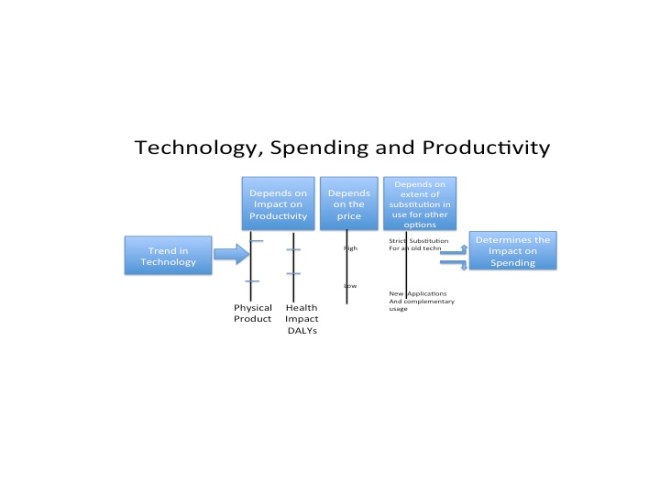
Conceptually, there is a relationship between adoption of technology, productivity and spending. We illustrate it here:

Slide5

The more productive it is, the more likely the possibility that spending will fall. If we introduce a new drug that is only marginally better than aspirin, costs 1000x more than aspirin, and gets used for new kinds of application as well. The impact on spending will be dependent on the impact on productivity (whether measured in terms of health or physical productivity), on price charged, and on how utilization is affected.


Why is Technology Growing So Fast

We have been avoiding a primary question so far in this paper. The pace of innovation is high, and has proven to make patient care (diagnostic and curative care) much more expensive. What is behind all that progress (if its been progress).

The pace of scientific progress, and the pace of adoption of new innovations are not random (the result of scientific luck). There are incentives and financial constraints that cause private firms to invest more or less in Research & Development, the underlying driver of innovation. And there are reasons why the government spends so many tax dollars through NIH, DOD, NSF and other agencies on scientific work in government facilities and through grant programs with university scientists. There are reasons, and incentives, why developmental and applied work research is aimed at health care, rather than other industries like automotive or aerospace. And finally, there are reasons why we regulate and support the adoption of the new technologies in health care the way we do, as contrasted with the way its done in other countries. All of these things have contributed to a set of incentives and financial support which have caused a huge American investment in health care R&D. It isn’t happening just because American scientists are better, or because our health providers are deeply committed to quality improvement of their services. No, it is the result a deliberate choices to encourage a super sized chunk of our scarce resources to be devoted to R&D, which, by the way, has contributed the lion’s share of the growth in health spending. The pace of technological innovation was not just given to us in health care, as something God alone might will.

There are reasons why the pace of innovation is so high in health care, higher than would be the case if only private firms selling to that industry were making rational economic decisions about sizing their R&D investments and distributing those activities across the opportunities in various industries they might sell to. Some of the factors that drive high R&D investments in innovation toward health care are:

  • Generally higher R&D in this country because the federal government funds directly (from tax monies) about a third of all the R&D done here, mainly funding the highly uncertain (and low return) world of basic scientific research. NIH and the other health agencies are a very large fraction of this basic research funding (some done in government labs, but most done through academic labs on grants). Across the globe, the U.S. government funds about 1/6 of all R&D in the world. We choose to subsidize R&D because our citizen-voters demand a high rate of growth in the economy (which is fueled by innovation), because we believe that progress is intrinsically good, and that both growth and scientific progress fuel economic opportunities for citizens who crave advancement.
  • The federal government (society) also chooses to provide strong incentives to private companies to invest more in R&D than they otherwise would. The incentives are provided by a strongly enforced program of Patents. These protections give monopoly power for up to 17 years for the owners of the patient, allowing them to recoup a return on the investment they had to make in the R&D that led to the discovery and innovation. Another post discusses the bias of public policy in promoting R&D.
  • Because of both of the above, the private organizations, including health care, that have business models dependent on innovation and scientific R&D will devote more investment into R&D than they otherwise would. Of particular importance is the focus of the government subsidy of basic research (which essentially produces a flow of publically available findings in professional scientific journals) that can be used for private gain by firms willing to invest in some future developmental (or applied) R&D to produce an innovation that can be produced and sold by the firm. By subsidizing the risky basic research activities, the firms are free to focus on the less risky kind of R&D that produces applications that can be taken to market much faster than if investments needed to be made in answering basic research questions.
  • Health insurance and FFS offers a receptive financing instrument for health care innovations, one that is conducive to fast and universal adoption of new products and services. There are three points:(1) new innovations enter the health care markets by being adopted by providers and provider organizations as new products and services, with their own prices. They do not have to enter as “inputs” into bundled products (like a new radio system for an automobile) which would be hard to get accepted unless it led to cost savings). (2) consumers do not have to pay for the new stuff (except for a very very modest copay) and professionals (doctors) generally can create new service products to “sell” as revenue streams if they adopt the new stuff. (3) There are no material systems of “rationing” adoption or regulatory control on adoption of new innovation, or setting prices for the use of the innovations. Insurors have economic interests in controlling cost effectiveness of new technologies, but, with few exceptions (in the form of plans having things like “formularies”) the only constraints on usage of new innovations are clauses of “medically necessity”, which are difficult to use stringently because of push back by the clients of the insurors.

For these reasons, health care is often the preferred industry of application R&D for many entrepreneurs with new product ideas. If you are a scientist, and discovered a new alloy or material, and were looking to cash in, the chances are good that your business partners are going to urge that the next phase of research (the applied phase— where you try to commercialize the discovery) be aimed at health care. That kind of “bias” in where the applied science is targeted has been going one for a long time. Health care is open to almost any product improvements, whatever their magnitude, and almost without regard to what those improvements cost! Looking at the data, health care also spends the most, by far, on R&D.

% of revenue spent on R&D is highest in health care

Pharma       Medical Devices     Telecom     Auto     Electronics     Aero/Def

12.9                         11.4                     5.6               4.1              3.9                  3.1

Also, there are reasons to be concerned that the pace of innovation driven by these factors is leading to declining productivity of innovations, with the only data on this being in the pharmaceutical industry. The referenced paper (represented here by my cryptic and superficial chart) studied dozens of published studies of placebo controlled trials of new chemical entities approved as new drugs by the FDA over 40+ years.

Slide6


The key measure was the effectiveness of the NCE relative to the placebo, measured here ion the vertical axis. There was a rather continuous decline in the size of the relative effectiveness of the approved drugs over this interval. It isn’t clear from the paper, or the research, what exactly this means, other than the new drugs approved today are about 1/10th as effective vis a vis the placebo as they were 40+ years ago. Does this mean that this is the result of some kind of “diminishing return” to a larger, more vigorous R&D process in the industry? Not necessarily. Does this trend generalize to R&D produced innovations in medical devices, diagnostic equipment, and other things? Of course not. But, it may mean that as the bar (current practice standard=placebo) gets higher and higher it become less likely that research touchdowns will be scored, and we’ll just have to settle for a first down here and there.

But, it may mean that larger R&D activities in forms that are larger, and want to grow faster for their investors, have developed better approaches for speeding and managing the yield of their research activities (yield would be revenue per dollar of R&D invested). The process of bringing new ideas to market may be better now than before in these organizations. Things that did not appear to cut the mustard years back may not be so quickly tossed aside today. Better management may also creating better ways to target research activities to getting a successful product than before. Or maybe it is marketing that got better. If the marketing process is now better able, than before, of “selling” clinicians on the idea of a “marginally better” product then this could explain the trend (eg years ago the “marginally better” ideas were trashed because they couldn’t be marketed effectively).

But, whatever the explanation, the productivity of the newly approved drugs is certainly lower than 40 years ago.

Health Spending, Technology, and Health System Productivity

Basic Economic Thinking and Tools of Analysis


Economic analysis is composed of a collection of scientific principles (we call them theories) and analytic tools for solving business problems and puzzles. It is a way of thinking about economic puzzles. Why did customers stop buying from us? How is it that firms pay some workers more than others for the same work? How can we best slow down the horrid habit of smoking? Why does the economy seem to stagnate at time, and then go through periods of rapid expansion?

Economics looks at business and situations in society and asks Why is this Happening? Demand is dropping off for our product. WHY? The economy is losing jobs. WHY? Women don’t make as much as men. WHY? Most bookstores closed in Harvard Square. WHY? Doctors make more than teachers. WHY? Retailers use coupons, but auto dealers don’t. WHY? Minorities are disproportionately undereducated and incarcerated. WHY? Health care services are more often used in Florida than in Minnesota. WHY? Economists are very curious people. When they see variations across groups, locations, types of organizations, they ask WHY? They look for reasons. Systematic reasons. Reasons that hold up in other similar situations. Reasons that can be tied to behaviors of people, consumers, businesses, or government. Economic theories lay out such behaviors (consumers of books stopped going to bookstores because internet shopping saved them time).

Economics is not like other management courses; it is a social science, where researchers test and ‘prove’ theories about the way the economy works. Then these theories are part of the body of knowledge to be “used” to answer questions and solve puzzles. There is a body of such knowledge relating to the way the entire economy behaves: what causes the economy to grow, to shrink, to create jobs, to fight inflation, etc. This is called Macroeconomics. The body of knowledge we call Microeconomics attempts to predict behavior of individual economic actors (firms, workers, shoppers) and the consequences of their interaction: how market prices are determined, how wages are determined, and business decisions are influenced by circumstances around them changing (competitors raises price, resources becoming more expensive, new technologies appear, foreign competition increases, etc.).

In microeconomics there are a number of basic principles we rely on to understand these kinds of choices of ‘micro’ units with regard as to how they manage their assets (time, capital, other private property) and to predict the impact of related policies of government:

  1. scarcity and economic choice
  2. specialization and exchange
  3. marginal decision making

In a narrow sense, economics helps us understand behavior of entities and relationships between them, and why differences in behavior and result can exist. Most economic relationships we want to focus on are of the following types

  1. For some groups of consumers or group of producers, why do variations exist in how they behave or how much they achieve? What kinds of relationships explain the systematic patterns we see in these variations? Economic theory helps explain this stuff.
  2. For all economic entities, what happens when circumstances change? What kinds of relationships between entities and their circumstances that can help us explain the effects of change on the fortunes of the economic entities? How do behaviors relate to circumstances? Economics explains this stuff too.
  3. Historically, microeconomics was concerned about the forces that determine price or value of various things in society using market-based theories in most of these circumstances. This works in situations where people are choosing to exchange private property.
  4. Modern microeconomics also tries to explain choices made by persons who are inside groups or inside firms where private property is not being exchanged. In such situations, persons still choose to work hard, or not, and they cooperate or they don’t, and so forth. Game theoretic models of economic choice are used to examine these situations and help economists understand how to alter behavior using incentives or other means.

In a broader social sense, economics shows/explains how it is possible that social harmonization can result from unorganized, self interested behaviors of people and firms acting according to the three principles above. This is a basic tenant of western political economy that generally advocates capitalism and individual liberty. It is all rooted in the work of Adam Smith and his rejection of the prevailing view that society would crumble if people were left to their own selfish, animalistic tendencies. Modern political economy now stresses (in the west) the roles of capitalism and individual liberty as the key to achieving economic gains, and wherein the proper role of government is regulating/guiding the free markets and liberty of the individual in those circumstances where the “invisible hand” does not result from private property and free markets (eg where markets fail).

Economics explains relationships by using testable ‘theories’. They are of the form “if this situation X presents under these circumstances, then we can expect that Y will occur”. These theories are basically oversimplifications of the actual relationships being represented. One well known and quite robust theory says that “ when the consumer notices that price of something they intend to buy has gone up, they will buy less of it”. This “theory of demand” is usually true under a wide range of circumstances, but it is not always true. Sometimes, prices of other products change at about the same time, and our prediction isn’t true. Or maybe a recession intervenes and appears to “disprove” our theory. Sometimes, for some products, consumers are so ignorant of the product that they look at price as an indicator of product quality. Under these circumstances higher prices cause more to be sold, not less. So, the circumstances are important.

Theories and the models of economic relationships from which they stem are offered in several ways in this course. Models (stylized situations that offer simplifications of reality in order to isolate key relationships) are shown in ways like:

  • Graphical models (depicting market situations, where transacting buyers and sellers determination of equilibrium price).
  • Game theoretic models (characterizing situations of codependence or rivalry between individuals)
  • Mathematical models ( Where it may be that demand is characterized by an equation such as Y=MX + B)

Economic models are used to examine and understand the way relationships work that connect the fortunes of entities with each other, with their circumstances, and with change. Microeconomics gives us a way of thinking about these relationships. The predictions of these models are theories—- they may be proved true or false (if price goes down, people will buy more) . Some of these theories of the relationships are bad, and don’t predict what really happens. Others are better. Studying these ways of framing the relationships gives us a power to connect the dots about the important relationships and how they may be working. Economics is basically a tool kit for studying relationships.

Economists keep revising their theories based on continuous testing against the real world. The way theory is used to explain economic relationships is exactly the same thing that people to when they are trying to examine the results of other kinds of relationships. “what can be expected to happen to that kind of person under this sort of circumstance”. As more and more data is collected, the theories get perfected. The theories concocted about life and relationships by a group of 15 year olds are not as refined as those of a group of 25 year olds.

Economics provides a basis for systematically analyzing (making general predictions) about how competitors, customers, markets, prices, profits and other things will respond when circumstances change. It provides a framework for thinking about what the consequences might be of taking a business action, or what the consequences might be if you don’t. Yes, it includes a bunch of concepts (demand, supply, prices, normal profits, marginal cost, etc etc) and includes some calculations too (contribution margin, elasticity, breakeven point, etc.). But, the main thing for you to get out of the course is the application of these concepts to sorting out common business problems. To improve shrinking profits, should we be considering raising or lowering our prices? What primary factors might we focus on to assess why wages for a position in one of our plants are higher than the same position in another plant? Under what circumstances should we agree to accept a one time offer by a customer to buy our product at a bargain price? It does not give us rules or exact answers to such business questions. Instead, economics gives us frameworks and approaches for thinking about these and other business problems. It provides a way of reasoning. This is the main reason you are here.

Economics is the general science behind the business disciplines of Marketing and Strategy.

This is not a math or statistics course either. Yes, economics uses concepts that can be calculated (like the profit margin as a %, or other concepts). And, advanced economic research uses math to formulate new theories and to test them to see if they are able to explain the real data. But here, in this class, we use math mainly to compute concepts or metrics measurements. The importance of economic training is not the computations anyway (anyone could be trained to do the math on a calculator). The important part of this course is the economic reasoning you will learn. If, for example, we know how steep the demand curve is for our product (something we measure and call elasticity of demand) then we know through economic theory how changes in price will translate into revenue changes for the firm. This can be important in decision making. Economists do not carry around calculators. And, they don’t spend their time creating formulas on their computers. For the most part, they are useful to business by doing economic analysis (research) to help management make better decisions by helping managers frame their thinking about business issues.

Economics is basically a stark simplification of the complex realities of the economy and all the stakeholders who participate in it from consumers, successful businesses, investors, regulators, entrepreneurial hopefuls, and others. Economic theory is too simplified (abstract, unrealistic, overly simplified) to be a guide to operating a real business. The subtleties of a particular business environment including product attributes, customer expectations, competitor behavior, regulatory issues, and other details are too specific, and management must be guided by a myriad of information much more detailed than could ever be included in economic theory. So why bother with this course? Economics provides a way of thinking strategically (long term) about markets, products, resources and competitors. It helps problem solvers cut through the complexities and data to focus quickly on the powerful strategic forces often underlying business performance; (1) demand theory is used to explain how and why consumers behave when they have fixed time and incomes, and face choices in the marketplace; (2) production and cost theory explains how businesses compete in the marketplace when they face different competitive circumstances for getting resources and for selling their products. (3) human capital theory is used to understand the priority forces at work as people make decisions about jobs and education, and as firms decide who to hire to optimize investments in OJT, among other things. (4) decision analytic concepts that help us to see the choice issues confronting interdependent decision makers such as the principal agent problem, the prisoners dilemma, the tragedy of the commons, moral hazard, and others.

Successful business leaders don’t need to study a lot of economics. They already understand their customers, their competitors, their suppliers, and their circumstances in a way that could never be described by economic theories. Their knowledge about circumstances and how it influences their fortunes is extensive and detailed. Their knowledge of the behavior of their competitors and their customers and how they will respond to each other and to management actions is not abstract, but almost clinical, and very personal. Business people generally understand most of the business relationships that matter as they relate to their products and markets. Though, they rarely understand costs very well, and often hire consultants to do special studies. But, in general business leaders know more about their businesses than an economic theory could ever explain. But the frameworks of economic decision-making, and some of the tools, may help members of the management team sharpen their analytic abilities and get noticed faster.


Economic Analysis

 Economics does not tell the business what to do, or what the salary should be for a job, or what the price should be for a pack of cigarettes. It is not a prescriptive science. Economists would say it is not generally normative in nature, but is mainly value free. There is a branch of economics that does aim to study how society can get the “most for the least” or the biggest bang for the buck. This is called “welfare economics” and it is used to compare the performance of different ways markets might be operating, or functioning.

Mostly, we want to focus here on understanding economic analysis; how to analyze data and situations from an economic perspective. There are a number of analysis techniques we will study.

  1. Comparative static analysis — this is the name given for making predictions about the consequences of events or changes on outcomes like prices, wages, production levels, and on who wins, and who loses. This is the analysis technique that will allow you to understand how things you read in the newspaper are going to effect your business or the U.S. economy.

Comparative statics is about making predictions about the direction of change, or movement, and it is NOT about forecasting the levels or magnitude of result. It is essentially qualitative not quantitative.

This technique is based on the concept of a market (an abstract notion of how buyers and sellers of things in the economy interact to determine things like prices and the amounts of goods traded) and how the markets will respond to some change. Making predictions it is like a thought experiment, where we imagine how the change that is happening will work itself thru the economy of buys and sellers. We will conclude, for example, that a huge western demand for special Ethiopian coffee beans will:

  • cause the prices farmers are paid for these beans to rise
  • which will cause the amount of land farmers devote to the production of such beans to rise (and less land will be devoted to producing other crops)
  • which will cause the prices paid by consumers of the other agricultural crops to go up in Ethiopia
  • which will result in some people not being able to afford to buy the products any longer, and some increase in malnutrition and starvation in the country.

This rather harsh result is only one avenue of impact of the western interest in Ethiopian products. Other lines of impact would conclude that new jobs will be created in the country, people will move to locate in the places with those jobs, and incomes will rise, rents will go up in those places, and a lot of people will be better off. Both scenarios, and others, can be spun as predictions stemming from somebody in a Starbucks research lab concluding that the Ethiopian blend is a good bet for a hot seller.

These predictions about the linkages and impacts of some change are what comparative statics does. You will learn to do it too. It is based on understanding how “markets” work, and how markets adjust to perturbations.

  1. Demand Analysis

Demand analysis is a collection of tools to help understand and measure the quantitative impacts of customer behavior on the quantity a firm can sell at particular prices. Topics considered here are demand and other elasticities that measure the responsiveness of demand to price, income, and other product prices. Demand (own price) responsiveness is essentially a measure of customer loyalty. This topic also looks at price discrimination (market segmentation). Demand analysis is a foundation for marketing and pricing.

  1. Cost Analysis

Cost analysis provides tools for measuring unit costs and making business decisions based on unit costs. The categories of cost we consider important are marginal (incremental), variable and fixed. Economic cost analysis is not a replacement for good, rule based accounting practice. Rather, it is a set of concepts and techniques for using accounting data to make decisions.

  1. Forecasting and Time Series Analysis

Forecasting is something that happens a lot in organizational and business planning. Mechanisms for doing it range from simple projection methods, to sophisticated model building to systematic review of pundits on the web who are paid to worry about what’s happening in a segment of industry.

  1. Profit and Risk Analysis

Profit is a key source of financing for most enterprises. And, it is a key entrepreneurial signal in the economy, predicting where investor’s capital will be flowing. That flow, the lifeblood of capitalism, depends on level of risk and return for investment alternatives. Understanding ways to analyze profit variances is important and will the Dupont identity, beta (a measure of risk, or profit variability) and over-under value of P/E ratio of stock.

  1. Explaining Variances

Managers learn much of what they know by analyzing variances. When they see differences in unit costs across suppliers, or different levels of loyalty across segments, or differing profitability across retail outlets, or differences in labor productivity across lines run by different managers — they ask WHY? What it means is not always easy to determine. But what is clear is that variances like these are symptoms of poor organizational performance. Variances always mean that eliminating them will improve performance. Always. We will see how techniques like regression analysis can be used to find the underlying explanation for otherwise unexplained variances.


Basic Economic Thinking and Tools of Analysis

Role of Profit and Non Profit Organizations in the Economy

Profit is the excess of revenue over expenses. It is the return to the organization (and if the organization is a for profit business , profit is the return to the owner of the business, the one who took a risk by investing resources to own the business).  There are a number of particular measures of profit, earnings, rates of return, and margins—all with value as metrics for scaling the profit against different denominators (assets, equity, assets, revenue, stock price, etc.). Retained Profit is valuable to all organizations in that it is a fund of resources that can use many purposes for improving the size, the quality, and the sustainability of the organization.

Profit is also a valuable metric in the economy, directing the attention of potential investors (persons and firms with money to invest) toward those investments in markets where consumer demand is growing, and where prices and profit margins are rising. And, causing them to shun investment activities where the opposite is true. Profits (excessive or inadequate to compensate for the risk) are the invisible hand of Adam Smith.

Trends in profit rates within our Hospital industry show the influence of ownership of hospitals. In hospitals, unlike most other industries, some Hospitals are privately owned and owners earn a return to their shares of ownership. Many hospitals are organized as Charitable organizations (IRS 501 C3), technically owned by the residents of their community, and as a result are exempt from all taxes in exchange for an operating mission to provide free community services to the community services. Other Hoxpitals are owned by cities, counties, and the federal government.

The chart below compares the profit performance for the Privately owned and the Charitable hospitals. Clearly, both groups of hospitals serve theoir missions by earning a positive profit. And, the private hospitals earn higher profits that the “so called”  non profit hospitals (they should better be called “non taxed hospitals).  

trends in Profit

Why do non taxed hospitals value profit? Whats going on?


Role of Profit inside the Organization:  Contribution Margin

One of the most important business concepts is “contribution margin”. It is the gap between the incremental revenue of doing something, and the incremental costs of doing it. This calculation, and this way of thinking stresses the point that fixed (sunk, overhead) costs are irrelevant to the decision). How much is the ‘doing something’ contributing to profit?

If we were asking how much a particular product (say the university classics department) is contributing to profit, we would as: How much revenue is attributable to that department? And, how much costs is attributed to the department? The difference is the “contribution margin” of the classics department.

Firms use “contribution margin” all the time to evaluate whether to take “one time offers”, like the training example. And, they more often use the concept to examine the profitability of various products and departments of a firm. Say, for example, you are trying to examine possibilities for reorganizing a place like Simmons, and want to strip away “losing” programs. So, you would proceed in one of two ways: (1) calculate the revenue attributable from each program, and costs associated with each program (these are called direct costs). The difference is contribution margin of each program. It tells us how much profit will go down or up if we wiped out the program. This way of looking at the “contribution” of each program to profit IGNORS all sunk costs, which will need to be paid if the program stays or leaves (like the president’s salary, and the building costs, etc.).(2) the alternate (and wrong) way to do is to this is to take all the fixed or sunk costs (sometimes called overhead costs) and allocate the share of these common costs that could reasonably be allocated to each of the existing programs (based on payroll size in the programs, or based on square footage used, or whatever). This we create a “fully absorbed” cost for each program. And, if we subtract this amount of program cost from program revenue we will get a measure of “profit” produced by each of the programs. Then you can scan these calculated profits, and decide which program to eliminate? Accountants love these kind of profits, where sunk costs are allocate down to each business unit. Accounting firms make consulting revenue by helping firms develop “fair” methods for allocating sunk costs. Actually these are not good metrics for deciding which business unit is pulling its own weight.

Fundamentally, the sunk costs cant really be properly allocated, so you can’t really be sure that these profits are really a good metric for understanding the “contribution” of particular program. The best approach to judging “which program is not pulling their own weight” is to measure direct revenue into that program, minus direct costs expended. Which revenue would be lost if the program were to be dropped? Which costs would be eliminated if the program were to be dropped? Direct revenue minus direct cost. Or, incremental revenue associated with the program minus incremental costs. This is the way to evaluate the decision to drop (or add) a program, or not. The revenues associated with it are weighed against the costs of doing it. Incremental revenues against incremental costs. Contribution margin!

So if General Motors was evaluating the Chevy Volt, trying to decide to keep the product or not, the idea would be to determine the contribution margin. This is determined by knowing the direct costs and the direct revenues. Or, the incremental costs and the incremental revenues. Common costs in General Motors, which are not associated with any particular product, are essentially sunk, and will be paid one way or the other. So, they don’t bear on the decision to drop the Volt or not. These common costs are the president’s salary, the costs of the accounting department, administrative buildings, etc.

Of course, to be sustainable, all costs have to be covered by revenue for the organization. And, products or departments that are not producing enough revenue to “pull their own weight” in terms of contributing their share of common costs are definitely problems. But, this is different that saying that because they aren’t pulling their own weight of commons costs they should be dropped. Indeed, if their contribution margin is positive, the organization would be worse off if they were dropped. Here is an example for the McDonald’s ice cream sundaes in the Boston stores in a week:

Item                                                       Direct contribution (sundae)                      All Products

Revenue 1,000 6,200,000
Frozen Product   & Meat costs    600 600,000
Container costs    200 200,000
All other Supplies (including choc sauce, strawberry sauce)    100 400,000
Advertising costs      50 400,000
Labor costs cooks   800,000
Labor costs counter   400,000
Store manager costs   200,000
Building maintenance & depreciation   2,200,000
Margin    50 1,000,000

If this rough accounting is accurate, it says that the contribution of Sundaes is $50 a week. Or, said another way, the total profit of the stores would fall by $50 a week if we dropped sundaes from the menu. To be sure, the contribution margin is low, and they may not be pulling their own weight in terms of their share of total store costs. But, determining which of these other costs would actually “go away” if we dropped sundaes from the menu would be hard, if not impossible to compute and even harder to implement. Certainly some of the labor costs are consumed by dealing with sundaes. But whether any of that time could be eliminated seems doubtful. Also, the management costs would likely not be changed if sundaes were, or were not, on the menu. If so, then the labor costs are sunk with respect to sundaes. I would expect if we were considering eliminating all milkshakes, or drive-in services, or other items, it might be possible to compute the potential labor expense reductions that would accompany eliminating the product. But, it seems doubtful that labor costs or building costs would be reduced if the product was eliminated, so we wouldn’t consider it part of contribution margin.

This issue of the “relevance” of common costs (overhead costs) in assessing the sustainability of products in multi product organizations is a big issue in many places. Yes, in the long run, the contributions of revenue of all the products must be large enough to cover the all the organization’s expenses—including all common costs. Management must plan and strategize its product line, operating, and capital decisions to this end. But, in the short term (now, and in the foreseeable future) products that don’t produce enough revenue to pass this test may still be worth keeping if they return enough revenue to make a + contribution margin. That is, their revenues are big enough to cover their direct costs. These are the costs that would go away if the product line were to be dropped. In the event that contribution margin is negative, and revenue is less than direct costs, then the organization would experience an increase in profit if the product were to be dropped.


Profit in the Organization and in Non For Profit Organizations

Profit serves various functions inside the organization. It is the wage or price or return to ownership’s investment in the organization. Typically, a good bit of the earned profit is “retained” by the firm for reinvestment in the organization (bonuses and raises, new projects, acquisitions, debt payoff, etc.). In non profit organizations profit is used for these same things, though it is fully retained (eg cannot be paid out to owners, board, or staff).[1] This means that retained profits are a source of financing for the organization.

By way of background a NFP organization is a complete misnomer. NFP organizations are granted tax exempt status by the IRS and state Attorney General’s under the law based upon a quid pro quo arrangement: they will be free from paying property or income taxes (to the society) in exchange for providing services to the citizens in their communities. This arrangement is a by product of our brand of anti government thinking in America, where we look to private organizations and markets to steer the decisions about what to produce, how much, and who gets what. In many other societies, the role of government is to actively direct the economy, and to take care of the citizens who may be disadvantaged by those decisions. Here, where the role of government is so limited, the NFP concept helps fill gaps for people in the largely private economy. The NFP is not only given a huge cost break of not having to pay taxes (when they compete with for profit hospitals for example) but they are also given a huge incentive to help them raise funds through philanthropy[2].

NFP organizations cannot operate indefinitely at a loss (earning negative profits), and prefer to earn a surplus (even though they don’t pay it out to ‘owners’). When losses occur in any organization (even a NFP) nobody steps in to write a check to cover the problem (certainly not the government, unless it is BMC). Losses generally mean a discouraging process of no raises, no expansion, no new technology or equipment, cutting corners everywhere, and all leading to diminished service quality, the best staff leaving the organization, and even more challenges raising gifts.

Profit is an important source of financing for all organizations: for profit or non for profit. Financing is money that is used to pay for assets used in the organization. Assets (the left side of the balance sheet) are things of value that are used in the operation of the organization. So, we need financing to “set up” the business in the beginning. When the organization wants to expand market areas, or acquire complementary businesses, or invest in new technology, or start a new venture/project they also need financing to acquire more assets. Saved prior profits are one source of financing. The other sources of financing are:


Kinds of financing For profit organization Not for profit organization
Profits from prior period operations (rev – exp)  


x


x

Borrowing


x


x

Philanthropy


  x
Selling more ownership shares  


x


Borrowing is a self limiting source of financing, as it would be for a household. Profit is a very useful form of financing because management (and the Board) has control over its disposition within the organization. Philanthropy has more strings attached.

Profits (surplus) can be used to expand services (as usually imagined in the mission statement), to improve service quality and technology, to hire and retain better staff, and to generally improve the effectiveness of the organization’s footprint in the community.

Non profit organizations implies they don’t make any profit—or surplus– nor do they want to. That is silly. They like surplus because it is an important source of financing going forward—and because the absolute minimum profit they can safely earn is zero.

They should not be called “non profits”, they should be called “non taxed” organizations.

One final point on NFP organizations. They may not act as if they are maximizing profit, like for profit firms. But the economic theory about marginal rules of decision-making behavior apply here too. When deciding to do something, or not, the idea of weighing the incremental costs against incremental benefits definitely applies. The only difference is the metric being used to measure benefits. Any organization that has objectives, and is making decisions in order to achieve those objectives, will follow marginal rules of decision-making. This includes decision-making in the presence of sunk costs (which are not part of the incremental costs or benefits of a decision option). Fixed (sunk) costs are always important in every kind of organization. But, the still do not figure in (or stand in the way of) the incremental decision-making of any organization that has objectives and is trying to achieve them.


Profit in the Economy

Profits and profitability direct the flow of resources in the economy. The central concept in this is the demand for investment. When profits are good, organizations earning profit, demand and get more financing, which allows them to buy the resources they need to expand operations, create jobs, and serve more people. And, furthermore, profits are valuable signals to other investors too, who also want to make investments in profitable markets. Think of a traffic light: when the signal is green, high profits are being made, and investments in this marketplace are on the rise. When the lite is red, profits are not good, and inflows of financing and investments are down, and indeed, there will be an outflow of investment. When profits are “yellow” (neither green nor red) the level of financing in the market is rather constant, not increasing or decreasing.

This process of profit signals for investment demand doesn’t work for the NFP sector. Here, the flows of investment tend to follow community need, not return on investment. Persons with money want to earn psychic income, and want their money to be useful in solving important problems in society. In some instances it is clear that investment follows need: the huge outpouring of NGO investments in Darfour, in Katrina, in Haiti and the like is evidence that the investment in resources chases need around the world.   In the U.S. the roughly $330B a year in philanthropy is collected from indiviuals (about 3/4) and much smaller amounts from Foundations, corporations and bequests. The uses of philanthropy devoted  mainly to Health sector (about 1/3) and smaller amounts to Education , Human Services, and other sectors.

Within any for profit organization, how does the demand for investment projects work? Every organization (FP or NFP) has a schedule of projects that is worth doing, but vary in terms of their value to the organization (internal rate of return). It might look like:


Project rate of return expected
1. new computer system       1,250,000 22%
2. web site for retailing             870,000 18%
3. acquire small vendor         2,500,000 14%
4. buy a fleet of trucks             1,750,000 11%
5. ad campaign for youth       4,000,000 10%
6. aggressive loyalty prgms   1,950,000 8%
7. leadership training prgm     750,000 7%

The organization will determine which projects to choose based on what it costs them to raise the needed financing. So if their cost of raising the financing is say, 13%, then only the first three projects can rationally be pursued to protect the financial sustainability of the organization[3]. Even if they are using last year’s profit as contrasted with borrowing from the bank, they have to think about opportunity cost. Is profit a “free” form of financing? Yes, in one way; they certainly don’t have to make interest payments, nor do they incur costs of raising it as they do with gifts. But still there is opportunity costs of using the savings to fund, say the fleet of trucks. They could (1) invest the money and earn 7-8% possibly, (2) they could save it until next year, and possibly a more valuable need would arise by then, (3) they could use the money to pay off current debt. It isn’t clear what is best here, but the point is that using profit isn’t free, it still has opportunity costs in a NFP organization.

Capital markets exist for Stock (ownership of for profit corporations), Debt (IOUs to be paid back) and Philanthropy (gifts). They are interlinked markets. It’s the same set of ‘savings’ that are being chased in all instruments, with the main difference being that the returns in the form of asset appreciation or income are being chased in the Stock and Bond markets, while psychic income is the benefit in using the savings to make philanthropic gifts[4]. But in all cases, the demand for financing is driven by the financing needs of organizations: What growth prospects are they looking at, what new innovations or market expansions need doing, what is their schedule of potential uses of additional financing.

So, organizations with financing needs look across markets for solving their problem. They will use internal funds, or borrow, or other alternatives based on the costs and flexibility of the options. Places where profits are high will tend to demand more investment (from existing firms and from new entrants). Low interest costs engineered by government will also encourage more investment across the board.

When governments persist in keeping interest rates low in the bond markets it buys or redeems outstanding treasury bonds. Giving the bondholders cash. This pushed the bond prices up and the interest rates down. The purpose is to encourage more investment projects be accepted at a lower financing cost (see the above schedule), which fuels the economy, spending, jobs, etc). The acquisition price of a bond relative to the value at maturity and the number years in between determines the effective yield. If interest rates are above this yield, then there will be no demand to buy these bonds at their current price, and the price will fall until the yield rises to the level of the interest rates. So, if the government is actively purchasing bonds, they are pushing bond prices to be higher and higher, reducing the yields (and the effective interest rates).

When this happens, the demand for capital investments is increased as i rates are lower. So, looking again at the schedule of projects above, the investors will be able to rationalize more projects as being “worth it” as i rates (financing costs) are lower. This stimulates the economy of course (the purpose of government’s policy) but encourages more debt on business and consumer balance sheets at the same time.

Why do firms want their stock prices to be high? If they want to raise financing (for expansion, for a merger, etc) by issuing more ownership shares. The amount of dilution of ownership that have to give up to raise a 1$ is lower when the stock price is higher. And, generally stock prices tend to fluctuate with profitability. This is because the investors shopping for stock tend to chase the best return they can get on their investment, given the level of risk. The return they get is dividends from earnings, and appreciation in stock value. Profit fuels both components of return: dividends are paid out of profit, and appreciation is a function of future stock price, which tends to be higher as profits are higher.


Normal Profit

Economists have created a concept of profit that reflects the level of profit that a firm needs to earn to keep the capital structure of the firm intact given its level of risk. At profit rates higher than this level, then this firm and others will be trying to expand the level of financing and take advantage of the high returns, above the level of comparable investments in the economy. So capital will enter the industry at profit levels above normal. At levels of profit below the normal profit level the firms owners (stockholders) are earning less than they might get elsewhere, and nobody would be looking to invest in becoming a competitor. So, capital will flee.

The normal profit level is what we would expect firms to earn in highly competitive industries.

To earn above normal profits on a sustained basis, a firm needs to have be blessed with some barrier to entry that prohibits competitors from entering the industry with infusions of new financing.


Sustained Profits and Monopoly Power

Sustained profits above the normal level can be earned only if persisting monopoly power exists. Monopoly power allows the firm to manipulate profit margins (on revenue) to their best advantage. The metric of profit margin (R-C/ R) is a good proxy for the degree of monopoly power held by the firm. High margins will tend to attract capital into the market. The margins will dissipate through entry of capital into the industry and competition unless there are barriers to entry of new competitors. The kinds of barriers that can exist include:

  • First mover advantage (which is thought to be temporary unless accompanied by one or more of the following)
  • Control of necessary resources or product distribution channels
  • Government grant of a necessary license or patent
  • Prohibitively high capital requirements to enter the industry
  • Brand or Loyalty advantages of existing firms


Profit Signals for Resource Needs Across Sectors of the Economy

To sum up, the levels of profit direct the economy’s new investments in products, services, equipment, resource demand, jobs, and the available financial resources in the economy. Profits are a source of investment financing, and they are also a signal to other investors about where investments might be best pursued. So resources flow in the direction of high profits in markets, and away from low profits in markets.

There are two exceptions. One exception is when monopoly power persists due to barriers to entry. Here, excessive profit margins can persist only if barriers to entry exist. A second exception is the non profit sector. The non profit sector is dependent on profit as a source of financing for doing their mission. But, the flow of overall resources is not driven by profitability. Rather, the allocation of investments is probably driven by factors other than investor profitability, including need, perceived need, and other factors.

[1] The owners of non profits are the ‘community’ of citizens who are served and who have supported the organization. In the event that a non profit is “sold” to a for profit organization (and the organization is dissolved) any surplus over debt payoff that is received is put in a trust for the benefit of the “community”,

[2] This break works as follows. People who choose to give money to the NFP are allowed to give pre tax money. This incentive is created when they are allowed to deduct the “gifts” from their income on their tax return. People could give money if they want to for profit organizations, or to private individuals standing in busy intersections, but they will not be able to deduct those gifts from their taxable income.

[3] The cost of raising financing is the ‘cost of capital’, generally computed as a weighted average of cost of equity and cost of debt. In the case of a NFP, where there is no equity capital, there is of course a cost of raising debt financing, but disparity in what the cost of equity capital is and how it might be computed. See Gapinsky Understanding Healthcare Financial Management (ed. 4).

[4] There is also a “money market” or asset preservation market too: it offers economic returns too, though small ones in the form of interest payments on balances.


Role of Profit and Non Profit Organizations in the Economy

Economics, Need, and Ethics

The study of markets in economics is basically the study of the consequences of “just letting things happen”. No direction, no plan by society, no overt choice is being made about “economic system”. People living their lives, and trading with others to get things they want and don’t have. Other people have too much of some things, and are prone to selling stuff they have too much of. Back in the “Barney and Fred” hunting and gathering days we traded. We still trade, but we use money as a medium of exchange, just to make it easier.   Free trade— is a way to get stuff in return for what you’re willing to give up. This is one important pathway to economic growth— specialization and trade.

But, at a more basic level it is “just what people do” without interference by authority. It is not intrinsically “ a good thing” or a “bad thing” to trade. People see something they want but don’t have, and they may be willing to give up something of equal value in order to get it. We barter, or exchange in other ways— but it is just a natural thing to do.

Of course, this “exchange” or “free market” has over time developed lots of support infrastructure (laws that protect people from others who don’t want to exchange, but just want to steal, transportation systems as public goods, that cheapen and encourage trade).

So markets are not good or bad—they are just what happens naturally.

Comparative Statics in Economics: Making Predictions about what will happen in a Market

Economics is a social science that makes and tests predictions about how markets behave (freely trading buyers and sellers). Comparative statics is the name given to the method of comparing one equilibrium to another equilibrium: “what is likely to happen” under some set of circumstances like:

  • What will happen to the number of jobs when minimum wages are elevated? What is likely going to happen to the price of Happy Meals or to the stock price of Burger King?
  • When there are cold winter storms in Florida, what will happen to the price of oranges? Or to the price of apples grown in Oregon and Washington?
  • When taxes are increased on Cigarettes, what will happen to quantity of cigarette smoking in America? To the stock price of pipe tobacco suppliers?
  • When there is an increase in the market share of phosphate controlled by the Moroccan government, what will happen to the price of canned corn in supermarkets?

These kinds of questions are answerable through comparative static analysis in economics. Comparative statics tries to examine the direction and size of impact of some single economic event like the cold weather in Florida, a change in the minimum wage law, an increase in the Moroccan market share, etc. Where are we know, where will be after the change works itself through the economic consequences. This kind of analysis examines the impact of only one change at a time. It cannot examine the results of more than one change. This is an important simplifying aspect of economic analysis. It is also a very powerful and disciplined way of analytic thinking[1]. Simple, one-change-at-a-time problems can be addressed using rather simple models of supply and demand in product markets, labor markets, and capital markets. These predictions are very powerful, because they provide a tool for businesses to make simple predictions about the likely impacts of “new events” on their organizations and on their competitors.

These kinds of simple predictions are not detailed. They don’t tells us “how much” price will go up, or if the increase in taxes will generate an increase in store revenues, or not. Sometimes, these more detailed predictions can be approximated by a more exacting specification of the economic model by adding data on specific “elasticities” (eg slopes of the demand or supply relationships) or on the “structure of costs” or on the “type of competitive structure in the supplier industry” (eg perfect competition, oligopoly, etc.). But, even with a more carefully specified economic analysis the predictions about “what will the impact be” are not going to be detailed enough for management action.

What needs to happen next? This is often where additional data from similar situations in the past for the organization can be added. Or maybe historic data from other similar organizations can be used as a guideline or benchmark about the kinds of consequences can be used. One commonly used tool to extend the economic analysis to the more exacting circumstances of the firm is the “scenario analysis”. Here, the analyst creates specific hypothetical scenarios out of assumptions (possibly an optimistic, pessimistic, and mid range scenario). These additional assumptions make it possible to make specific predictions about relevant business impacts (eg revenue, profit, input costs, or whatever the business is interested in projecting) or choices about what to do (lower price or match competitor’s price, invest or not, advertise a little or a lot, etc.). Management can be shown the scenarios built around the economic impact model, facilitating decisions about what to do, and how best how best to do it. The extended economic model using hypothetical scenarios defined by assumptions will frame the discussion that management needs to have.

The analysis of scenarios can also be extended further by doing “sensitivity analysis”. This is done by seeing how the model projections respond to changes in a key parameter whose value we don’t know. For example, how will revenue respond to the assumptions we are making about the loyalty of customers to the competitor’s product? We can create a ‘sensitivity analysis’ by allowing the specified parameter(elasticity of demand of the competitor’s product) to go from the lowest to the highest plausible value (say, -0.50 to -.99) and observe how much impact this parameter variation creates predictions about our revenue impact. Some parameters will be important and sensitive drivers of our predictions, others not so much.

The model and its sensitivity results is not going to tell management what the decision should be. But it should help managers see what assumptions drive the impact (and guide further investment in more data collection) and risks of particular management actions (and guide discussions about how to mitigate the risks).


Ethics and Economics

The economic analysis of “what will happen if” some change occurs, can be made using a simple demand-supply prediction of the questions posed earlier, or more specific quantitative impact analysis using scenarios and sensitivity tests. These economic “predictions” are intended to say “what will happen”. The prediction (pick one of the questions posed earlier) may ultimately be proved correct, sort of correct, or not correct at all. Economics is a social science, not exacting like physics or chemistry. It is a social science because it is based on observed (but not inflexible) behaviors of people.

Economics is not about “what should happen” or “what should organizations do”. In doing impact analysis as discussed earlier, the question is not whether Morocco ought to act like a monopolist, but what can we expect them to do when they have more monopoly power? It answers the question of what can we expect to happen when we raise the minimum wage, not whether it is good or bad that we do it.

Essentially economics is a set of theories that help us decide what the impacts of changes are likely to be. When the theories are wrong (yield poor predictions) they are amended or changed. For example, basic supply-demand models (and the theories of self interest that lie behind them) were not doing a good job predicting why firms were not paying some workers what they appeared to be worth. To fill the gap Gary Becker invented the theory of human capital, which predicted that firms that invested in workers need to exploit them (pay them less than they’re worth) in order to recoup investment costs of training. The bigger the investment, the more exploitation to expect. This theory also is a foundation for the prediction that the rather large historic difference in years-with-the-firm between women and men in jobs requiring training would predictably lead to lower wages for females than men, and more qualifications for females relative to men. This is a prediction from the theory, not a normative or ethical proposition. When faced with more competition, U.S. firms may predictably react by outsourcing manufacturing to China, creating large U.S. layoffs of semi skilled workers. Is this the right thing to do? Economics has absolutely nothing to say on this question.

Is this kind of outsourcing ethical? Is Walmart paying the average worker $8.75 an hour (2013 data) fair? Should we let firms pay women CEOs less than their male counterparts. Is it equitable that 0.1% of the people in America have half the wealth? All interesting “normative questions”. Possibly there are compelling arguments to make on these matters. But, such analytic activities are not part of economics.

There is a branch of economics (normative economics) which asks questions about what conditions in markets are conducive to maximum output and maximum social welfare given the scarcities we are endowed with? It is this part of economics that gives us the ideas that market economies with perfectly competitive conditions can produce the most. And, the idea that monopoly power is ‘bad’ because it reallocates resources in ways that cause “less” to be produced by the economy. The whole idea of “market failure” is grounded in this branch of economics, saying that social welfare (aggregate productivity) suffers under situations of market failure. The other idea that is normative in nature is that “diversity” in productive capacity of individuals (and collectives of individuals) provides a basis for specialization and trade, and the gains in productivity that results for everyone. But, these aspects of economic theory are very limited is their attempt to say what is “good” or “bad”, and when this is done it measures value in terms of overall social productivity.

Need and Demand

Demand is what someone (or everyone together) is willing to pay for something. Need is a subjective driver of demand. I might observe that Jane says she “needs” a new car. This is a statement about preferences. It is not an action she takes. She may decide to act on the “need” and wander into a car dealer and decide what kind of car she is willing to pay for—or she may not. On the other hand, her husband might look at the same situation and say that Jane definitely doesn’t ‘need’ a new car. Need is in the eyes of the beholder. Even in a technical field, like health care, the idea of “need” is subjective. You primary care doctor might say you don’t ‘need’ surgery, even though the specialist said you did. The absence of certainly and relevant science in health care situations creates very few absolutes about what is “needed” to deal with a certain situation.

Even if every subjective opinion agreed that “Jane needs a car” there is a problem. How are we going to cope with the fact that a car involves the expenditure of scarce resources to make. It isn’t free. Is Jane going to be willing to forego other things she could have had in order to get a car that she “needs”. Maybe, maybe not. Without solving the problem of scarcity of resources, she will have to be willing to pay or else the “need” she expresses is only a silly fantasy. Maybe her father will pay, or maybe she can convert need into action by some other way. But the fact that there is no free lunch in a society facing scarce resources, will make “need” a moot point, and one that is only a subjective expression of little meaning or consequence.

There is one way in which “need” is actionable, other than someone “who needs a new car” converting that wish into action by “demanding” one in the market.

Sometimes, quite often actually, people with “needs” are blocked from converting that wish into demand because they cant afford to pay (the price is set largely on the basis of the costs of the scarce resources used in producing the product). Because of scarcity IN EVERY SINGLE MARKET PEOPLE & FIRMS THAT WOULD LIKE TO BUY ARE SIMPLY UNABLE TO PULL THE TRIGGER TO BUY BECAUSE THE PRICE IS HIGHER THAN THE VALUE OF THE THINGS THEY COULD BUY WITH THE MONEY IT WOULD TAKE TO BUY. Opportunity cost. In some cases they might even have to borrow to buy it, and give up not only things they could otherwise have today, but things they’d have to give up tomorrow, and next year. They don’t pull the trigger (or they cant’ pull the trigger) on their “need”. They are “priced out” of the market.

This problem of converting want or need into demand is sometimes created by poverty (economic endowment disparities). Monopoly power by suppliers makes this problem more aggravated because the price tend to be set higher.

Sometimes this “unmet need” is acted upon by society, sometimes not. I could say I really need a Lear Jet for my own personal convenience, but society isn’t going to step in in a compassionate way and forgo the “needs of others” in order to get me a plane. Or if Sam “needs” to buy a gun, society is not going to step in and buy them, foregoing what the resources could have otherwise produced. Or your “need” for a higher degree, isn’t necessarily going to be shared by others to the extent that they are willing to give up something they values in order to help you out by paying higher taxes.

But, sometimes society does recognize that important things are being given up by people who are “priced out” of the market, and a collective decision is made to do something about the “unmet need”. So, my need for a plan, and Sam’s need for a gun are unlikely to get many votes from our neighbors to set up a “tax-transfer” program to meet our respective needs. But, if poor single moms are unable to afford to buy a healthy diet for their children, this “need” may be acted upon by society. The “unmet need” is said to rise to a level where voters (the collective) are willing to force some persons to “give up” things so that the poor moms can get the food they “need”.

So some needs are deemed “important and socially actionable” while others are not.

Like sausage making, this is not a pleasant process to watch. Some people’s “unmet needs” are more important than other persons’ unmet needs. Mr Big Wig the “job creator” has “needs for a jet” that are actionable by Congress (acting for the society) by creating various tax code allowances. Important needs for primary care for those poor kids are often not me because of the incentives created by Congress $ Exec in the way we pay doctors.

Solving the “important needs” of those unable to pay are one of the drivers of government decision-making. This problem of “poverty” is one of the sources of market failure, and one of the legitimate roles of government in the market economy.

In the study of health economics, many make assumptions about what care is “needed” in a given situation— and if that care is not “demanded” (eg. sought) the person must be either ignorant, or uninsured, or otherwise limited by access barriers (distance, income, discrimination, etc.). But, this may not always be the case. From the theory of health production we know that people behave differently according to preferences, the scarcity of time, and the scarcity of income. They choose their own target level of health based on these factors, and the result is that health status varies (rather systematically) across people. We can observe this variation and say ” how can people be so ignorant, or why dont we have universal coverage? But, i can guarantee you, even with full knowledge and universal care, the choices of health level will vary, because when it comes down to it, the persons preferences and scarcities matter. They always will. Look elsewhere—scandinavia, Canada, any other place— it is simply naive to ignor the fact that scarcities and preferences vary, and even in places where money is not a barrier—time is scarce, and that scarcity will vary across people— and the result will be that health behaviors and target levels will vary systematically across people. Not because they are stupid or ignorant.

Are all nurses or all doctors similarly healthy? Of course not. Why. The answer is they dont want to be!  The point of this —- be careful with the term “need” for care. What is a “need” for me, may not be a “need” for you. Absolutes are hard to come by in health care. Usually, where you hear people say “she needs that test” what is being said is really — “if i were in her place, i would want that test” —-  but of course, thats the whole point— you are not in her place, nor is she in yours.

[1] It is easy to spot undisciplined and totally groundless reasoning. This occurs when someone creates complex scenarios (some would say realistic) that reach beyond the power of simplifying economic models, or any other analytic device to try to make predictions.

Economics, Need, and Ethics

Primer on Efficiency and Costs

One of the central issues in economics is what ensures that scares resources will not be wasted in creating goods and services. What ensures efficiency? There are two subordinate questions: (1) How do we measure it? And (2) What can society do to make sure there is no waste?

This is not unrelated to the issue of how we ensure that societies resources are spent making the things that people value the most. Together, the idea of no waste (which is called “efficiency”) and producing the most wanted things (which could be called “allocative efficiency”) determine the “value” of those things we produce and the value of the resources that go into producing them. In a market system, these “values” are prices set via supply and demand, and the dynamic forces of competition between suppliers and free entry and exit of suppliers who are chasing profits. To reiterate, in a health sector context, there are two kinds of efficiency.

Technical efficiency- Producing outputs at minimum costs – this is about how things are produced

  • Do we assign the right number of workers to our clinic to ensure they are fully utilized?
  • Do we have the right mix of nurses and other staff, so nurses do not do things that staff that are paid less could do?

Allocative Efficiency– Producing the right outputs meet organizational objectives – what is the mix of things are produced? Are we allocating (eg budgeting) resources properly across activities in the firm— could we get more yield (or profit) if we reallocated the mix of activities or products?

  • Do we spend enough on prevention as contrasted with curative care ?
  • Do we spend too much on a few high cost patients who get very little health gain?

Efficiency means “no waste”. What that means is the in the production process, the input output relationship (called the production function) defines the maximum output that can be produced for any level of input (or, if you prefer, the corollary, the minimum input level that can produce any particular level of output). In the chart below,

Costs, which are described more below, are a product of three things— (1) the technical input-output engineering possibilities involved in making the product or service, often described by a production function, (2) the price that the firm pays for the inputs, and (3) the choices the firm makes in properly choosing the mix of inputs to produce the level of output they choose. We return to costs below.

Technical Input-Output Relationships

Productivity is output per unit input. It is a technical, or engineering-like concept. It is depicted as a production function, which describes the possibilities for generating various output levels by expending more or less resources (see below).

prod function

On the production function points below the line are achievable, but is not very efficient, because we could produce a higher level of output (on the production function) with the same expenditure on inputs. Points above the line are not feasible with existing know how. Productivity (output per unit input) is often used as a metric for understanding whether the economy or an industry like health is getting more from its scarce resources, or not. Productivity growth is highly valued.

The level of technical progress changes, and this effects the shape of the production function. When the computer comes along, for example, and allows auto-control of production, for example, it allows the firm to produce more with less, and the experience is called “an improvement in efficiency”.

On the production function such an improvement causes the production function to shift up. Producing more with the same inputs as before, and making the *** points feasible. Progress is experienced in improved productivity in many ways: innovative products (the cotton gin, inventing/discovering penicillin, know how in terms of starting a fire, or inventing hybrid disease resistant seeds). Investments in physical capital (FC on the chart) will increase the productivity of variable inputs like labor.

Investments in human capital will do the same thing, shifting productivity to higher levels for the same level of hours worked. (Human capital is skill level, know how, and of course formal education). Health status is also a form of human capital, as is education, marriage, worker migration to find better “fit” with the economy. Better management capabilities or finding more effective way to run an operation is also an important area of human capital investment. Organizations choose to invest in a variety of forms of physical and human capital. Both tend to reduce the need for variable resources in order to achieve the same output level (eg they reduce the variable costs per unit) and improve contribution margin. They may, of course, often be considered added fixed costs (as all capital investments are considered fixed costs).

Generally, the adoption of improved capital of whatever form, the whole optimum for the organization changes. The optimum level of output may change (the optimum sized facility (output level with the lowest cost) will change, the relative value of certain kinds of employees will change, as will their salaries, and some resources, possibly even important ones in the past, will forever be shed. Progress isn’t best seen as layering new capabilities onto old ones. Think of it as a massively deep reorganization of everything. It always get spread over time, often as a result of managerial lags in discovering the full implications of the technological progress at work.

The production possibilities above the line, shown by the *, are impossible to achieve. For a given level of variable input, we just cannot produce these high output levels. The output levels shown by the + are possible. Here we could produce less output than is possible. We do this all the time, and it is called “technical or productive inefficiency”; producing less than might be possible with the resources we are using. When organizations operate in this region (+++) the have costs of production that exceed the minimum possible.

Why can this happen? Obvious answers are that they are ignorant, or their managers and systems can’t deliver it, or they pay too much for resources, or whatever. From economics, however, the answer is different. This happens because nobody is forcing them to do better. That is, we observe persisting inefficiency only when markets and competitive pressures are absent.

When does this happen? When the organization has monopoly power, for whatever reason. Maybe government protects them (patent, licensing, or a highly regulated industry) or there are other barriers for competitors to enter the market and force them to be more efficient in order to survive. Or maybe consumers are not effective shoppers for best value. This can happen when they can’t assess value as they shop (asymmetric information) or when they don’t pay the full price (like when they have insurance).

So efficiency is a technical thing, relating to inputs and outputs. Generally, we would expect any organization to prefer to be efficient. Why? Because regardless of their degree of competition they can produce more profit if they are efficient. But, external pressures to be efficient can also be present when the organization faces competitive pressures that customers will flee unless they set the lowest possible price. This external pressure is sometimes present, sometimes not.

When markets don’t work well, or when organizations don’t care, it is hard to force organizations to be efficient (to produce at the minimum cost). We see that in health care a lot.

Market Advantages of Being Efficient

When firms are more efficient than others in an industry it provides enormous leverage for them. They may gain the following:

  • Ability to price at the same level of the competitors, but make higher margins
  • Ability to gain market share by pricing below the competitors, and drive them away
  • Relative to competitors, ability to self fund activities like loyalty and share building promotional campaigns, R&D on new products, and better service
  • Relative to competitors, long term security regarding sustainability in the industry

These are enormous advantages, and firms routinely examine the efficiency with which they operate with an eye to making improvements in efficiency.

Allocative Efficiency

Given scarce resources, this means producing the combination of products that yields the greatest level of overall output (welfare). Generally we might illustrate this with a “production possibility curve or a schedule as shown below. The multiproduct firm has this issue, the society trying to decide how much of each product and service to produce has this problem, the person trying to decide how to balance work, home and school has this problem.

This semester you are trying to decide how to allocate your time between family (F), school (S) and extra effort for work (W). You figure you are committed to work 40 hours a week for sure,  to sleep 50 hours a week, have 14  hours a week personal time, and to spend 12 hours a week commuting. You also think you must devote a minimum of 20 hours a week for “family time”, and 15 hours a week to school. So, of the 168 hours a week, you have only 17 hours a week discretionary time left.  How best to allocate this time is the problem. The following data show how you think about the value of time spent doing each of the three activities in question;

                                                                                                                F                   S                W

Total “benefits” of spending  1 extra  hour a week on

20                  7                  12

Total “benefits” of spending  2 extra hours a week on

30                 11                 17

Total “benefits” of spending  3 extra hours a week on

38                 14                 21

Total “benefits” of spending  4 extra hours a week on

44                 16                  24

Total “benefits” of spending  5 extra hours a week on      49                  17                 26

Total “benefits” of spending  6 extra hours a week on

53                  18                 27

Total “benefits” of spending  7 extra hours a week on

56                  19                 28

Total “benefits” of spending  8 extra hours a week on      58                  19                 29

Total “benefits” of spending  9 extra hours a week on

59                  19                 29

In this simple example we are trying to solve an allocation problem. Three streams of activity are presented, with a scarce resource to be allocated. The “best” or “benefit maximizing” way to allocate 17 hours of time is to spend 8 hours on family, 4 hours on school, and 5 hours on work. At this point we achieve maximum total benefits from the resource we are allocating. The way we do it, by deciding where best to spend the first hour, then the second, then the third and so forth, is essentially equating the ratio across activities.

 For an economy, we would maximize benefits by allocating resources across products the same way. But it would be more complex. The principle is the same: Allocate resources to products and services so that the we achieve production levels for each output such that ratio of incremental benefits (to consumers) to incremental cost for all products are equal. So, if we have a product for which the output level is such that marginal benefits/marginal costs is higher than others, then society would be able to adjust the output levels are arrive at a higher level of net benefits. Specifically, to produce more of this product, and drive down the ratio of incremental benefits to costs until it is equal to all other products. And services.

Measurement of Efficiency

Industrial engineering is the field that concerns itself with efficient design of operations. Even as “lean” and “Six sigma” creep into service businesses, these are products of industrial engineering activity done in manufacturing to hone the production process to make it continuously searching for the most efficient way to do things. Trying to find the location of the production function, trying to move from the +++’s to the production function itself.

In manufacturing, efficiency is easier to analyze than in service businesses like hospitals. Mainly the problem in service businesses is:

  • Identifying and measuring the “output”
  • The fact that service producers usually make multiple kinds of outputs
  • And, finding ways of adjusting costs across multiple outputs for the for resource costs associated with producing them (eg adjusting for severity or casemix).

Service businesses are often characterized by “professional” standards (sometimes licenses) for the key labor categories. This is one way of dealing with the fact that multiple products are produced, and that we need some way to make sure that we deliver the right product to the client. When you have one product the whole thing is much easier. So for lawyers, accountants, doctors and nurses, pilots, even civil engineers, and others— we have created ways of making sure that organizations have information on who is able to make the right services, and who is not.

In health care, the growth of the industry has sought ways to define the output(s), because that is key to understanding how one might measure and control efficiency, and to control and improve quality, A local doctor started all this in 1913:

Really the whole hospital problem rests on one question: What happens to the cases? [. . .] We must formulate some method of hospital report showingas nearly as possible what are the results of the treatment obtained atdifferent institutions. This report must be made out and published by eachhospital in a uniform manner, so that comparison will be possible. With such a report as a starting-point, those interested can begin to ask questionas to management and efficiency”.

Dr Eugene Codman, Address to the Philadelphia County Medical Society, 1913

It took until about 1970, and the cost increases associated with Medicare/Medicaid, before Robert Fetter at Yale actually began to look into this issue seriously. His team eventually produced output measures in the form of 383 different hospital inpatient products. The Diagnosis Related Groups (DRGs) got picked up by the Congress and the Federal government and made into a set of 383 prices to use to pay for Medicare covered hospital care. And, the DRGs, having been refined a number of times since then, are used to measure output of hospitals in order to not only pay, but to: measure efficiency, measure outcomes, and to allocate budgets across facilities. They encouraged similar kinds of output measures to be developed for other kinds of health care businesses (home health, nursing homes, and even physicians).

Costs and curves

Costs are the expenses we incur as a supplier of goods or services. Keeping costs at a minimum is the life’s blood of business— if we cannot keep costs at or below the level of our competitors, we may well not survive. Keeping costs down is one of the key managerial responsibilities, along with finding a steady stream of customers who are loyal to our product or services, and keeping the power of government on our side.

Costs, in theory, are either fixed or variable. What economists mean by this distinction is that FC are costs associated with the servicing of long term illiquid assets (building, debt service costs, machinery, office equipment, etc.) and the costs associated with salaried workers, who cannot easily be ‘let go’ just because volume projections or the operations plan are not being met. Variable costs are those costs associated with selling more goods, or less goods. We usually think of elements of costs that are easily adjusted down if we aren’t selling as much as we had hoped, or can be adjusted upward if we ramp up production levels. Things like hourly worker hours, power costs, supplies, raw materials, sales commissions. This is theory. In reality there isn’t a bright line between cost elements—within an operating period some costs are very variable, some very fixed, and some that are somewhat fixed. But, the theory is useful in supporting observed behavior and influence of economic forces, even though somewhat simplistic assumptions are used.

Fixed costs are invariant to output. They are a fixed amount, and must be paid regardless of output. While to total is fixed, if we compute average fixed costs (by dividing FC by Q) we see that AFC fall continuously. The more we produce, the lower is the average fixed cost.

Variable costs are more interesting, and are responsible for the shape of the cost schedules, or curves. The total variable costs rise with output, by not at a uniform rate.     Variable costs reflect the production function’s shape: the marginal productivity of the variable factors of production (in the face of a rigid set of fixed factors, like plant size and fixed equipment). So, we observe that total variable costs rise as volumes increase, but then rise at a higher and higher rate with respect to output as a result of diminishing returns to the variable factors of production. The main panels of the accompanying chart show the relationship of the production functions shape and the total variable costs. The small panel on the left translates this to the shape of the unit variable cost curve (the average variable cost curve). The U shape is the result of increasing return to the variable factor of production (on the left side) and the diminishing returns to the variable factors (on the right side).   see the figure below

shape of VC

The total costs are the sum of variable and fixed costs. The average total costs the total costs divided by the number of units. Looking across possible volume levels the average costs (ATC, AVC) are U shaped, because of increasing and then diminishing returns — a feature that stems from the shape of the production function (the technical relationship between inputs and outputs). The AFC is not u shaped, since it is a fixed amount, divided by volume levels. Fixed costs are “spread” across more and more volume—so the AFC gets lower and lower as volume increases. When we plot ATC, AVC and AFC together on the same graph, the distance between ATC and AVC is the AFC. See the second figure.

AC curve

The supply behavior (decisions to supply or not, and how much) of firms is governed by variable costs (AVC and MC). MC is the change in TC when volume increases by one unit. For those with calculus, the MC is the first derivative of the TC. There are three rules about supply:

  1. firms will shut down (not produce anything) unless price is higher than AVC. This is the same thing as saying that unless contribution margin is +, firms will not sell.
  2. The firm will always optimize financially (eg profit maximizes) when they sell the quantity of goods indicated by the point where P=MC. The only exception is when the firm has monopoly power (a downsloping demand curve) when they will sell the quantity where MR=MC.
  3. In cases where the price exceeds MC, there will be an incentive to sell more
SUPPLY
the topic of supply decision making is really about the economics of firm decision making. Should the firm get into anew line of business (new products) such as flipping condos? Should they accept a proposed discount price?  How much should they plan to produce if we expect a certain price point?  This is a broad set of supply related decisions—-and most of it revolves around short term decisions –where we end up being stick with fixed costs. So, contribution margin is often central to decision making for these kinds of decisions. Long run decision allows us be treat all costs as variable—this is used when we are planning the future of the company, and blue skying the future product mix, future markets, future configuration of the company, etc.
ALLOCATING OVERHEAD (COMMON COSTS)
In a nutshell, managerial accounting often teaches that firms can calculate the profitability of product lines, or regional divisions, or retail stores within the firm. This is done by allocating overhead (corporate common costs) to each of the units we want to calculate profit for. Then we can compute a “profit” for each business unit. The problem is that the allocation of “overhead costs” is intrinsically arbitrary—- we can allocate in many ways, and no one method is superior or more logical than other methods (methods of allocating overhead costs is often based on labor costs, or sometimes based of square footage used, or based on revenue, or other “overhead bases”. Yes, the profit will depend directly on how overhead costs are allocated. And, managers fight all time is every firm about what the “basis for the allocation” to be used — every manager wants a “basis” that will cause their division to get the smallest allocation possible (and show the biggest profit, or the smallest possible loss). This fighting consumes an enormous burden on management time in most firm. This fighting does nothing productive– it just pushed the fixed costs and the profits-on-paper around inside the firm making some units look better or worse. But, in the end, these are common costs (presidents salary, cost of buildings with headquarters in it, the legal department, etc.). and they cannot  be allocated correctly anyway. And the point of these cost allocations is just to “show” business units what their profit and loss statement looks like—- even though it is incorrect and indefensible. What is the best approach— save the money you spend on the accounting firm you pay to do the overhead allocation—save the management squabbling— and just use contribution margin for the business units and don’t try to guess about what “share” of the common costs they should be charged.

Long run costs

The LR is a planning concept. It asks, what can the firm look like if we consider options for size, organization, product, etc. There are no rigid fixed costs in the LR, since everything is variable. There is no diminishing returns as a result. If, the firm doesn’t believe that price will cover its ATC in the long run, then it will not go forward.

There are factors that will tend to make the LR ATC curve U shaped. As we consider larger and larger scales of operation for our firm, we imagine that average costs will fall with size. These “economies of scale” arise because with size, come opportunities for lowering our costs. More leverage over supplies to get lower prices, more leverage over clients and customers which might cut the costs associated with “customer service”. We can also expect more power to set lower wages for our workers. And with size might come advantages in marketing and distribution of our products. These things help cut our average cost.

But with increased size come counterveiling forces that ten to increase average costs. These are inefficiencies associated with management control problems. How do we keep the organization lean and mean as it gets very large. Is management able to get the maximum productivity out of all workers, is it possible to train enough competent managers to staff the growing organization, can we keep getting top technical people for key jobs, when our demand for them is 10X or 100X as bog as when we were smaller? These kinds of “growth” and “bureaucratic” problems contribute to increasing average costs. So, as we grow, there are factors tending to reduce costs. And, at the same time, as we grow, there are other factors tending to increase costs. Generally speaking, the initial growth of the firm features the economies of scale outweighing the diseconomies of scale. As the firm grows even more, eventually the diseconomies of scale outweigh the economies.

Primer on Efficiency and Costs

Career Advice for new MBAs

Advice for new (or about to be new) MBAs

  1. Attitude adjustment: As an MBA , other people will expect you to be a cool, confident, analytical thinker! — someone who isn’t afraid to interrupt a meeting to say “wait a minute, lets examine this before we jump to that conclusion”. Don’t disappoint these expectations. Set the bar as high as you can for decisionmaking in your organization. Demand to know the evidence, and why a proposal is better than the alternatives (including doing nothing), or “why we aren’t insisting on applying the same performance standards for all regions”! And, above all, use that standard relentlessly in your own work products.
  2. Please stop analyzing decision options or behaviors (customers, competitors, colleagues, suppliers) as “good or bad”. That’s not a useful MBA analytical paradigm–except for ethical issues, Good or Bad depends on vantage point (them, us, society, customers, etc.). Get use to analyzing behaviors in terms of “economic consequences”, and impact on “business performance”. What will be the consequences of doing it this way or that? Just stop saying Good or Bad in this context.
  3. To repeat the point a different way: “opinions are not good enough” for supporting an MBA’s recommended action. Evidence is required. “Opinions” are just not persuasive, and we expect more from MBA’s. When you are trying to persuade, think carefully about what you are recommending, and what evidence you need (and have) to support it. The CEO may decide based on her opinion, but if that’s all you bring to the table to persuade her, your likely going to hurt your chances of promotion.
  4. In the work force, come to understand what you are very good at, and what you’re not so good at —  relative to peers. This self analysis of strengths and weaknesses provides invaluable and controllable leverage on your career if you use it strategically.  Eg   Forget trying to fix your deficits (unless you want to dedicate your life to becoming an expert in it). Nobody gets singled out for being competent at everything that’s been thrown at them (except flag officers in the military). People need to differentiate themselves from their peers by showing what they can do better than others who might have been asked to do the same activity. You may not understand yet what your differentiating strength is, but early in your career you need to learn what it is.
  1. You can’t build a career by bouncing around jobs that are someone else’s idea of what you should be doing. Volunteer or advocate for jobs that entail activities that you do better than others. If you can’t do this, then your career is out of control.
  2. Doing your job is necessary but not sufficient for getting noticed and promoted: Recognize that everybody who gets promoted must do something special, really extraordinary, something that is above-and-beyond expectations that creates an impression and serves as a data point for those who are advocating for you. Maybe its an analytic memo you wrote, or a report on something, or ideas brought into an important meeting, or design of a training plan for someone. Whatever it is, do something special. To do this you must go beyond expectations. Maybe expand the task to try anticipating the next question that management will ask— and use the opportunity to ‘go beyond’ by getting data on those next questions (even though you were not asked to do so). Don’t try to do this for everything. Pick your spots. Spend extra time, give up some weekends. Go above and beyond. Impress them. This is your rare chance to really produce something memorable, and produce something unexpected. This is your ticket to getting recognized. In all likelihood, you are going to have to prove yourself by doing something special other than managing. That’s going to come later.
  1. Another tip: Use your training to be analytical about your role and how it is fitting into the bigger picture. ALWAYS understand exactly what you and your manager are doing, why it is being done, what the stakes are in the organization, what’s been the history on this issue here and elsewhere? Prepare yourself with getting “perspective”. Don’t be satisfied with someone telling you that you “don’t have a need to know” something. Framing the problem correctly, and getting perspective on  it will make your work products better, and will may help you get practice seeing what the issues look like from higher level.
  2.  Become a more nuanced analytic thinker. Understand the difference between “efficiency” and “equity”. Most business decisions have options that span these two objectives. Look for them. Understand what behaviors and incentives create “more for less”(efficiency solutions). Also understand what stakeholders are going to win/lose if these efficient solutions are pursued (the equity outcomes). Learn to weigh the options this way. The more “principled” one is, usually implies that these trade-offs in decision making may become more difficult. Learn to understand and become able to unpack decisions in terms of the nuances: (1) what options are there for the decision, (2) what impacts are there for each option on both “efficiency” and “equity”, (3) which stakeholders win and which lose. Simple black and white answers are seldom helpful. People will learn from you. That’s really good.
  3. Passion: Yes its good. But most employers want you to be passionate about your work, about helping their business succeed— not necessarily passionate about other stuff.
  4. Don’t embarrass yourself. Understand the difference between Cost and Price. Price is what the buyer pays. Cost is what the seller incurs to make the product or service. Profit is the difference. MBAs understand this. Also understand and never forget that there are two ways to lower price and get more customers: cut the money price they pay (sales, coupons, discounts, etc.) and to cut the time price they must pay to shop, to get information, to make comparisons, etc.
  5. In a business setting, don’t use the verbs “to prove” or “to feel” or “to believe”. Proof is a really high standard, and it is nearly impossible to ever “prove” anything (generally it is sufficient to say we have data supporting something, not proving it).  More importantly, using any of these verbs tends to cause some people to conclude you are poorly trained, sort of like confusing cost and price.
  6. What interviewers like to see is inquisitiveness and full engagement. Focus on the person, answer their questions succinctly, and ask good questions as the interview unfolds. And, above all, show you are listening carefully! If the interviewer asks a question you dont understand, then ask to clarify. If you dont understand a response the interviewer gives, then ask for clarification. Make sure the questions are following the conversation— don’t bring stock questions to the interview. Use your brain to query them—like you would if you were talking to friends over coffee — If possible, control the interview. Get enough information to decide whether you want the job. Don’t be a passive interviewee. Actively engage. Let them know they are dealing with a proactive, take-the-initiative type of person by the way you conduct yourself. Everyone wants to hire people who can quickly engage the issues, and who can demonstrate that they can use their brain.
  7.  Remember that incentives can almost always be constructed to change behaviors. Change the money price or the time price to encourage shoppers. Change the on-the-job incentives to reward higher productivity. Change taxes on sugary beverages, change buyer behavior. Whenever choices are being made, Incentives almost can be constructed to influence behavior.
  8. Experience suggests that “being perfect” is nearly always the enemy of being effective and efficient. What this means is that how much time you spend doing a task should be related to the incremental benefits and costs of spending additional time. “Perfect” almost always means trying to find the solution that avoids all risk of being wrong. To be perfect, or to avoid all risks of being wrong means spending far too much time collecting data, waiting around too long, passing good opportunities by, etc. etc. — going well past the point where it made sense to quit looking, waiting, and being indecisive. Planning is good, but “perfect” is usually way too high a standard for moving forward. Learn to pull the trigger when its clear which option is best, even if it may not be perfect or without any risk.
  9. Before you go investing (and risking) your time and your career to start a business/organization, learn that business and its customers well. If possible, take a job that lets you learn. If you already have a job but want to start a business, find something you already know or understand and make a list of the systemic performance problems. Look to this list as opportunities for creating value in an industry you have some knowledge of.
  10. When you write memos, or other documents, learn to tell a simple summary story. What you write and how tight it reads is your brand in the world of work; make it disciplined, consistently good, and matter of fact. Write the summary story up front: what’s the issue(or options), what’s at stake, what’s the answer you’ve come to, what’s the evidence that drives the answer. Write that simple story so that your uncle could understand it. Then follow that with section headings (that frame your story) followed by paragraphs that have topic sentences followed by evidence to support them. Remember the audience for your work, and that senior people may read only the first paragraph—tell your story AT THE BEGINNING—nobody cares about a summary at the end! If you can’t tell a simple story, then you haven’t thought about it enough, or researched it enough, or gotten enough expert advice, or youre answering the wrong question. Be a disciplined and reliable staff analyst, and develop a reputation for writing tight, disciplined deliverables.
  11.  Always be a ‘student’. Insight, new knowledge, understanding…..they await the curious mind. When you see some new behavior, or new tactic… ask yourself WHY? Variability in performance across business units, across people, across organizations… is the symptom of something to discover. Why did we win the contract? Why is this situation happening? What is it telling me? If we are dealing with variability in business unit performance, then that variation is a key to knowing how to improve overall organization performance. Be curious. Ask ‘why’? And, for heaven’s sake, set the bar high for others on this point. Learn by asking questions. Be the  curious one in your organization. Help others see the benefit of knowing ‘why’.
  12. Understand your job, and your job description, but dont think that’s why they hired you. They hired you because you’re an MBA — and as such they think you have growth potential for the organization that others dont have. You are going to be expected to see things that others won’t be expected to see, to speak up about it, when others won’t, to present logical and data driven arguments that will be persuasive whether written or verbal. At the core of these abilities and behaviors should be a compulsion, wherever you work, to get to an understanding about how and why that organization works, or doesnt. What is the business model, what are the key drivers of success. How does it compete in the marketplace? What is holding it back? Watch, listen, and get to understand it. Hold your tongue. But remember that while its not your job to understand how the business works, your ability to do this may well be a key to far you can rise in your career. Keep asking yourself “why?”. Let it haunt you. “What are the fundamentals of this organization? How does it really compete successfully? What is biggest risk the business faces? What kinds of people work best in key jobs? Where should the budget priorities be to make us bigger or better?” Think about these questions, collect the data as you get to know the organization better, develop and modify your views, and don’t foist them on others too quickly. It is practice for your next job, and the next one after that! Good luck!


Career Advice for new MBAs

Economics of Income Distribution and a Source of Public Anger

Donald Trump ,the candidate, was nearly unbelievable to many Americans. He was the winner of the party nomination without assembling a large grass roots organization, without being specific about how he would change things, and had not raised much money nor spent much on advertising. And, he was not a professional politician, not a source of new ideas and new programs for fixing the nation’s problems, and not easily categorized by the usual labels we put on politicians. Where did he come from, and why was he been politically successful without behaving in the way we expect successful politicians to behave? The reality show of his convention and the campaign, was not traditional, but extremely popular to many Americans, and highly troubling to others. What’s going on?

Trump, or someone like him, is a product of the times. In the ‘good old days’ the candidates tweaked the traditional messaging of their party, and won by demonstrating good looks and charisma, by spending  political capital earned by long experience producing favors for other politicians, by having superior fundraising and organizational skills, and sometimes even by the subtleties of their message itself.  But why Trump?

My thesis is that he has successfully channeled the anger, and overwhelming economic frustration that has risen up in America. Americans understand that traditional messaging of politicians about incremental changes to try to improve the lot of their voting base: a bit more added to the minimum wages, promising to lower taxes, or provide somewhat bigger defense budgets, cleaner water or air, abortion rights, even Supreme court composition— these incremental political issues didn’t cut the mustard for candidates on the political stump this year.

For too many many American families “it’s the economy, stupid”: economic opportunity isn’t what it has been, or what was hoped for. Jobs have disappeared, and prospects of new ones are not evident.This is a serious catastrophy that has been growing. This isn’t  about economic policy and slower-than-expected economic growth. This is about people not having jobs. And, its about no prospects for children being able to afford to stay out of labor markets long enough to go to college and emerge into promising careers.This is about much of what we used to consider the “middle class” sinking into a sea of lost hope and growing stress; its  the world of continuous high stress, well known to the nation’s poor.

This situation has been emerging for a while, but politicians haven’t done anything about fixing it. For the afflicted, the problem needs bold, out of the box, and immediate attention. And, yet when all of us look around, what these people see is that some Americans appear to be doing well, earning preposterous salaries, and showcasing their wealth on TV for all to see. And, the incidence of this core economic plight has been growing in America, creating deep anger and bitterness. Politicians have, of course, been exploiting this, as politicians will do— reminding people about their plight, and pointing their finger at their opponents to place the blame (eg the theme of the speech by Michael Douglas in The American President) But Trump has put the pieces together and is positioned well for channeling the anger so effectively: by being the outsider (not the insider and part of the problem) and being the the “bold business decision-maker” (to step up to the big problems and opportunities that confront America). He has also been able to depict Obama & Hillary Clinton and his understudy as the indecisive, dangerous, cronies of vested interests that wont step up to the real issues. And, to be sure, Mr. Trump said nothing about “how” he might tackle the jobs and income security problems we face. He has not had to be specific.He has flooded the media with evidence that he both understands the deep angers of the people, and has the brash outsider style that suggests that he may well be able to take remedial action. He is the candidate for a very troubled, and for a troubling time in America.

Stepping back: The income distribution in America has been changing quickly. I think this is the source of the growing anger in America and source of Mr. Trump’s appeal. The rich segments of society are growing richer at at an alarming rate, and the middle and poorer households are stuck. The politics in America are reflecting the anger over this inability to make progress, and being in the long social media shadow of people who get richer and richer. The chart below shows the growth rates for segments of the income distribution. Overall, four of five people have experience income growth over the past two generations of less than 1% a year. And, at the same time the highest earning americans have seen incomes rise faster, with the rate of increase being higher, the higher the income. The inability of most struggling families to experience opportunity for their children is made even more difficult by the public displays of wealth and extravagant consumption in the media.

The problem with income distribution reminds us that the way people end up sharing in the economic pie in a market system is through their participation in the labor market— earning wages for their work. This labor force participation is, for the most part, the way people get their tickets to the products and services produced by the market economy. Lots of good thinkers have suggested that this is exactly what is wrong (inequitable) about a market economy. Offsetting this, here in America, is the well documented view that capitalism is the way to grow the economic pie faster and bigger than the non-market alternatives. Progress can be fast in a market system. But, we leave behind sometimes quite large groups of displaced workers (witness Detroit and the rust belt cities, or Lowell/Lawrence).

distr 1

One of the implications of the widened gap in income inequity is shown in the following chart— a picture of the “American Dream” of having one’s children have a better. or more successful life’

american-dream

The “dream” has been slipping away as so many of the middle and lower class household are unable to see their children have a higher income than they have had.

Here in America the trends in progress over the past 150 years or so have differentially affected labor markets, with knowledge and skill related jobs being created, and with manual and low skill jobs being eliminated. What this does is to cause “shortages” in the high skill jobs and “surpluses” in the low other skilled jobs. Or, rising wages in the former and falling or flat wages in the latter.

What caused the trend? Lots of things cause progress in the economy: Invention (cotton gin, wireless communication), innovation (Henry Ford, the Internet), scientific progress (longer life spans and human genome),  discovery (oil and minerals), and capitalizing on foreign trade and comparative advantage.

This trend in “progress” creates winners and losers in the economy. Every time changes occur in the flow of goods and services as a result of “progress” some new jobs are created and old ones disappear. This has been going on since the beginning of mercantilism, and the pace is speeding up. Look at the graph below that characterizes trends since the Vietnam era. The upper income groups seem to be capitalizing on progress, and the low wage earners seem to be disadvantaged. Two things of note about this trends in the impact of progress; (1) this is a growing source of the anger we see in our society. The lower income groups are living in a world that seems to not have economic opportunity, and their low skill jobs are being lost. And, it an intergenerational problem— as the rich get richer the poor (and their children) do not. (2) this didn’t start with President Obama and the new trade agreements, or lack of border control. Its been going on a very very long time. And, little of it has anything to do with Presidential authority and policy. It is about the changes in the economy and job structures that arise when scientists do their thing, when entrepreneurs do their thing, when innovators do their thing, and when consumers looking for better bargains do their thing.

This “progress” drives a wedge into labor markets and the income distribution, at least temporarily. Then, as people adjust, it resolves. The problem is that it may take generations to resolve, and may involve families moving long distances to find better jobs (and loss of family ties),  investments in college educations, smaller families to match smaller incomes, and other disruptive things. But, in the labor markets, we still find upward pressures on higher paying jobs, where progress stretches the supply of qualified labor. And, soft labor markets at the low wage level, where progress is always working to displace jobs and create added supplies of workers in other continuing low wage jobs. — tending to suppress wage increases in the low wage jobs.As depicted here, the ‘wedge’ between high paying jobs and lower paying ones have contributed to the income distribution trends.

distri 2

The disturbing trends in the distribution of labor (rich getting richer, and the poor not getting richer) are caused by “progress”, or technologic changes and innovation including things like outsourcing supply (brought on by free trade, cheaper transportation technologies), inventions and disruptive innovation (like the internet and Amazon, mall shopping, assembly line production, electrification, robotics, etc.) and several other more modest influences like Labor force participation of women going up when birth spacing became reliable. Yes, immigration of unskilled and language-challenged persons may make this wage “gap” problem worse(though the immigration of highly skilled and educated persons will ease the upward pressure on wages at the upper level).

The disturbing trends in income distribution are exacerbated by the trends in education across income groups. This interesting piece shown below from the New York Times is quite depressing. The chart on the right below shows the trend in the % of children receiving a college degree, by income group. It is alarmingly like the income distribution chart— alarming, but not unrelated. The income distribution is something parents pass along to their children. It is an intergenerational legacy ! (in spite of the talk of opportunity). The chart on the left shows how the legacy is, in part, executed. It shows the student college entrance exam score—and how they are correlated with income. This pattern stems from the way we fund K-12 education in America…. By using property taxes. Poor communities generally have poorer schools, richer communities have better schools.

distri 3

The only way to “have our cake and eat it too” (get progress without the disturbing impact on the distribution of labor) is to make it possible to make the labor market adjustments to “progress” more quickly. To make it possible for displaced low skilled workers to transition more quickly to other useful jobs. And, to allow the new forms of high end jobs that will need to be filled to be filled faster! This could happen by:

  1. raise the levels of formal education
  2. provide incentives for employers to provide job training for newly needed workers, and for workers being displaced. (this might also create a demand for new vocational educational organizations in the U.S.)
  3. provide new bridging public works programs (probably at the community or state level) to provide jobs for chronically unemployed persons. this is like the jobs programs during the great depression (building roads, parks, dams for water control, and other things).

A Human Capital Theory of Demand for Household Investments in Education and Health 

The theory of Human capital (G. Becker) provides a basis for understanding how people make decisions about using time and money to make investments in future well being.  Specifically, we are thinking about the demand for education, the demand for health, and the demand for relocation. Unfortunately, the theory may explain some of the systematic failures of poor people from making these kind of investments.

When we think about “demand theory” we are usually thinking about people deciding whether to buy goods or services (and expend shopping time) based upon the incremental benefits of consumption, and the incremental requirements of time and money. This kind of decision calculus doesn’t really apply to directly to decisions when the benefits or costs are spread over future time periods.

Lets say we are looking at the decision to invest in a single evening course, which will create a skill that allows wages to be higher going forward. The decision would involve the costs of the course: foregone benefits of using time as well as the money costs. And, the benefits would presumably come in the form of higher wages in the future.  For simplicity, the costs of the course are incurred in the current period. The benefits of higher wages would be spread over all future years. The decision might be framed as:

Course costs      =   W1 – Wo    +    W2 – Wo   +   W3 – Wo  +   …..  + Wn – Wo                                                including time         _________            ________           ________                    ________

(1+i)1                (1+i)2              (1+i)3                       (1+i)n

where  i  is a discount rate reflecting the person’s time value of money, and the exponent for the discount factor is shown following the parentheses. What this says is that the future wage benefits, whatever they are, become less and less important as the occur further and further into the future.

Why does money (or any benefit) have a lower value when it occurs in the future? Well, lets say someone owes you a dollar. They ask if you would prefer to have the dollar repaid now, or a year from now. You would always prefer it now, because you could always do something with it now (like put it in the bank) and it would be worth 1.02 or 1.03 or much more a year from now depending what you do with your choices. The value of money depends on when you get it —-  the value is greatest now, and the value declines the longer you have to wait.

The time value of money is going to be different across people. The general form of the equation shows the time value of money represented by a discount rate (i). The time value of money is larger, the larger the discount rate. If the discount rate is large, say 10%, then the value of future benefits falls very very quickly off into the future. The benefits at the end of  year 1 are worth on 90% of the nominal amount to be paid. But after 2 years, the discount is (1.1 x 1.1 = 1.21) or 79% of the annual benefit. After three years it is 67% and it continues to decline. On the other hand the stream of benefits valued in current dollar terms declines very slowly if we use a discount rate of 2% ( at the end of year 1 –98%,  year 2  — 96%, year 3 — 94%, year 4  —  91.8%, and so on. The degree of time preference is described by the discount rate: persons with a strong preference for “living in the moment” will not value the future benefits highly– they will have very large discount rates. People who are always thinking about the future, and planning for it —- value the future benefits more —- and have lower discount rates.

So, in theory, we can think of 2 people. Person has lives pretty much in the moment—- sees little benefit in postponing benefits until tomorrow. The stream of 7 years of higher wages for taking a course is shown as person A. The discount rate for this person is 10%.  The other person (B) has a discount rate of 2%:

Model 1                                            1         2         3             4            5          6            7

10 year stream of Benefits A     90%   79%    66.9%   55.6%    39%     23.8%   5.2%

10 year stream of Benefits B      98%   96%    93.9%   91.8%    89.6%   87.4     85.2%

So, for Person A, the benefits associated with waiting 7 years are virtually nil — 95% of the value is gone if we have to wait 7 years. While, for person B after 7 years there is still considerable value in waiting 7 years to get benefits.

So what’s the point? People are different. Waiting or postponing benefits is not something that creates a good stream of future benefits for Person A, but it may interest Person B.

So what about choosing to make educational investments? Young people will make different choices about getting a college degree:

  • some will perceive a higher opportunity cost of not working (or working less) than others —- other things the same, these people will not attend at the same rate
  • some will perceive more urgency in time preferences than others (a higher discount rate) —- other things the same, these people will not attend at the same rate

Unfortunately, these differences are not just randomly scattered across all high school graduates.

So what about choosing to make Health investments? Some benefits of healthy living (eating well, exercising, etc.) may yield current “feeling better” benefits. Other benefits, of course, may not appear until later in life. So, the benefits for health investments may be seen as short term and others long term. The long term benefits at the point of decision are going to be worth far less to persons with high discount rates than for other persons.

So, what might contribute to differentials in time preferences across socioeconomic groups? Where does “investment” make sense, and where doesnt it make sense? In the case of poor persons there may not be much opportunity to wait. When you dont know how or if a meal is going to be on the table tonight or not, it would be easy to conclude that discount rates regarding future benefits are going to be very high. Urgency rules.  Planning, patience, investments, and future returns all may pale in the unmet needs of the moment. Investments in education just don’t look good because the benefits are well over the horizon, and seem not worth much from todays vantage point.  In spite of comparability of other costs and benefits in the model 1 earlier, the difference in the time preferences (discount rates) will make the health investment look less attractive for person A than person B.  And, person A, the the high discount rates, may have such time preferences because of the urgency of poverty. Health investments by poor families may just not make economic sense.

Educational investments are similar. This situation, if true, is problematic, because the avenue out of poverty for families may well involve educational investments of money (opportunity cost) and time. This may help explain the why the income distribution is so sticky for the poorest Americans, and why the ” reproduction of privilege ” piece notes the very poor educational attainment of the poorest young people. So, if the urgency of life creates a view of time (present vs future) that is different for the poor than it is for others, then the demand for education my be suppressed because the stream of future benefits is weighted much lower in value than for a comparable middle class person.

Changing the Social Contract?

The way society produces and shares its yield with the people is the “social contract”. As we noted earlier, the market system has a social contract that says: from each according to ability, to each according to ability! The Socialist view  was “from each according to ability, to each according to need”. The income distribution is at the heart of this dispute. The incentives generated in markets and labor markets (do more, do it better, and you get to consume more) help grow the pie faster, but they are definitely creating a problem in America.

What’s the problem. Two class societies have existed throughout history. Haves, and have nots. Why not just let the trend go on? In a word—violence. The political consequences of the anger that is generated by the unequal distribution of income and wealth will create political disequilibrium. Count on it. History is pretty clear on this cause-effect consequence—and ironically, American foreign policy proclaims that the worlds people have a right to democracy (self governance) and to overthrow regimes that protect wealth for a selected class by having some dictator, monarchy, or military rule. Look at the Russian and French revolutions, what happened in Iran, Iraq, the Arab spring, Cuba, and other places. Angry people will revolt. They are revolting today–the ‘lone wolf’ terrorists in America are not so simply a “muslim” problem. This is pent up anger being vented. People completely trapped and frustrated by society, people with no hope. There are millions of them in America. Most will turn to drugs to numb their anger. Many will cope. Some will turn to violence.

Our angry right politicians are simply capitalizing on pent up anger by the left behind segments, pointing fingers at immigration, on muslims, on the the IRS, on government in general, on Obama and Hillary. Violence by angry and frustrated Individuals will growingly be in the news. This isn’t a pretty picture.  50 years ago many of this middle/lower class were called “the silent majority” (eg middle class workers and taxpayers). Whatever we call them, they  aren’t going to stay silent. We should worry that the violence that is emerging will create political instability, and shut down a functioning government. Somehow, this seems to be the direction we are going.  Somehow, we must redirect the anger.

The social contract needs to be rewritten. The number of jobs is not growing as fast as the number of people.Technology will continue to steepen this trend. Robotics is still a small symptom of the influence technology is going to have on jobs and the necessary size of the labor force. And, the price of higher education will continue to rise, shutting down the demand, one of the most important vehicles for creating an avenue for displaced workers and their children.

In spite of fantasies about “the good old days, where good manufacturing jobs existed to propel millions of families into the middle class, jobs are, becoming less useful a tool for allocating the product of our economy. Milton Friedman proposed an answer 50 years ago–the negative income tax. It wouldn’t be any more popular today than it was then. Or, we could adopt a solution adopted by President FDR in the 1930’s to put America back to work: the large scale government employment programs (including service). This wouldn’t be popular now either. Trump proposed to shut down trade agreements that cost jobs. As a high wage country, trade agreements are almost always going to cost jobs in America in order that we can specialize in our comparative advantages of technology and services–and so we can reap the gains of letting our trading partners specialize in making things that use lots of cheap labor. Better trade deals (or no trade) is a solution that may keep more jobs at home, but it will certainly shrink our economic pie. How much would it cost to revert to economic isolationism? 5% of GDP, 10%?

All of these solutions are problematic and divisive. What are we to do to provide hope for the economically hopeless? To redirect the anger, and the violence it produces?

Economics of Income Distribution and a Source of Public Anger

Literature on Impacts of Provider Payment in LMICs

Background

 Generally speaking, provider payment can be used as a tool of health reforms to ‘align’ the incentives facing providers with the overall health system objectives (efficiency, quality, etc.). Providers (doctors or other service providers) are generally perceived to be unusually important in helping patients make decisions about treatment patterns. Consequently, the kinds of payment incentives faced by providers will help determine health system utilization and overall resource consumption (Eggleston and Hsieh, 2004). And, since incentives can be formed by payment policy, the specific objectives of reform (improved efficiency, reduction of unnecessary hospitalization, promotion of better patient outcomes, etc.) can be promoted through the tailoring of the incentives. Often, the government implements incentive payment schemes for its own facilities by changing the rules for budgeting or compensation in order to create incentives. But, sometimes the provider payment reforms are narrower, such as when they are part of a ‘private provider contracting scheme’, whereby the government arranges for some type of care to be delivered by private providers, or when a private insurer establishes arrangements for reimbursement of private providers. Another narrow application is when incentives are established to supplement salaries or budgets in the form of bonuses that may or may not be paid based upon pre-set performance goals. ‘Pay for performance’ payment policies (P4P) are often schemes based on bonuses, designed to supplement salaries or budget allocations.

Provider payment reforms are generally any form of “contingent compensation”, as an alternative to salaries (for health professionals) or line item budgeting (for institutions). Sometimes the contingencies are prospective, such as when a patient is admitted for a procedure, and the payment will be set at X. The ‘contingencies’ can also be set after a procedure in some P4P programs, and if a desirable result is achieved, then the bonus will be Y. The contingencies in payment rules tell the provider what will increase and decrease payment. Hence, incentives are designed to induce providers to do more of those things for which there is higher payment, and to do fewer things leading to lower payment.

Unlike traditional forms of ‘line item budgets’ and ‘salaries,’ all payment arrangements that involve a fee schedule or some other payment schedule (like capitation), there will be explicit efficiency incentives (downside risks), and also explicit possibilities for capturing increases in revenues (upside risks). Upside potential exists because the payment schedule pays a fixed amount per procedure, per day or per visit. Whatever the ‘unit of payment’ is, the provider can earn more revenue by doing more of it. In this sense, incentive payment approaches emulate competitive market mechanisms by ‘paying more to providers who do more’. If consumers have free choice of providers, then this incentive on volumes may also create incentives to upgrade ‘service quality’ as providers actually compete for patients in order to expand service volumes. As has been the experience in many countries (Langenbrunner and Wiley, 2002) these volume incentives of fee schedules can be so strong as to promote rapid growth in health expenditures, leading to further reforms to control volumes through budgeting the service package.

Prospective fee schedules may also create provider incentives to reduce costs in ways that prove detrimental to patient care. This consequence of incentives always poses a risk, and may result from deliberate choices, or be the result of poor management within the facility. In all cases, payers need to monitor providers for the possible risk of under service in incentive systems. This type of vigilance often requires data and analytical skills unavailable in poor countries, making it difficult to consider provider payment reforms. This issue is reconsidered in the last section of the paper.

The scope of the incentives to change provider practice patterns is related to the scope of the services included in the fixed payment amount: the larger the bundle of services paid by the payment rate, the more the potential for economies and the greater the tendencies to under serve the patients. To understand the scope of incentives we refer to the risk factors whose variation can contribute to overall cost of health care:

  • Efficiency: resource cost per unit of service. Contributing factors include prices

paid for inputs, as well as number and mix of inputs per unit of service.

  • Intensity: ancillary service utilization including testing rates, special service

utilization (ICU, CCU). Length of stay.

  • Case-mix: care needs of the different kinds of patients usually associated with

age, diagnosis, and level of function.

  • Volume: according to the unit of payment and the number of patients, visits, and

days.

  • Referrals: cost associated with sending the patient to another provider.
  • Epidemiological risks: factors that affect disease occurrence rates in a population

like random factors as well as epidemics, flu outbreaks, etc.

Salaries and line item budgets do not give any authority over resource allocation to the provider. Here there are still strong incentives: for replacing work with leisure, for supplementing income with moonlighting or informal fees, and for under-investing in management skills. Fee schedule reforms, on the other hand, cause the provider and the payer to share the (constant sum of) risk. The more services that are bundled into the single unit of payment, the more risk is imposed on the provider, and the less is borne by the payer. Under a per diem approach for hospitals, for example, the provider is at risk for all matters that affect the cost per diem, and the payer is at risk for all factors that influence the number of days of care. Under a capitation arrangement, providers who are paid a fixed per person rate are essentially at full risk. The trend in policy regarding provider payment policy appears to be to shift more and more risk to providers, thereby encouraging stronger efficiency incentives (Quinn, 2003). Table 1.2 shows the risk sharing agreements between payer and provider for various payment approaches.


Table 1.2: Provider Payment Methods and Risk Sharing by Payer and Provider

Payment Policy Contracted Provider

at risk for:

Payer at risk for:
Hospitals


   Line item budget Efficiency, intensity, casemix, Volumes, epidemiological
   Fee schedule

Per diem


Per case (DRG)


Efficiency, some aspects of intensity


Efficiency, intensity


Some aspects of intensity,

casemix, volume and referrals,

Casemix, volume and referrals, epidemiological

   Global Budget (with

volume and casemix      ‘

adjustments

subject to a limit)

Efficiency, intensity, and the

portion of casemix and volume

changes above the limit

Casemix and volume up to a

limit. and referral care (to other organizations), epidemiological

Physicians


   Salary Nothing Efficiency, intensity, referrals,

volume, epidemiological

   Fee Schedule (FFS) Efficiency Intensity, case mix, referrals,

volume, epidemiological

   Bundled Fee Schedule Efficiency, some aspects of intensity Some aspects of intensity, case

mix, referrals, volume, epidemiological

Fund-holding

By primary

physician/clinic


Full Capitation—

payment per

person per year


Efficiency, intensity, casemix, some

aspects of referrals, volumes per

enrollee


Efficiency, intensity, casemix,

volume, referrals, epidemiological


Some aspects of referrals,

epidemiological


Nothing

The strength of incentives (to do things that will generate more profit for the provider) also depends, in part, on the dynamic aspect of the payment formula: e.g. how does the rate (or budget) set in one year relate to the rate or budget in the subsequent year? If the new rate is set based on how much profit was made by the provider, then the incentives will be weak. If the new rate is blind to the amount of profit made by the provider in the prior year, then the incentives will be sharper. To illustrate, consider the case of the provider that, in the prior year, successfully reduces costs and earns a nice profit. If the rate formula sets the new rate lower, in consideration of the now lower costs, then the provider (and others) will be discouraged from becoming more efficient, since the next year’s rate will punish them for becoming more efficient. The alternative dynamic policy is to set the new rate based on the prior year’s rate, blind to how efficient the provider has (or has not) become. This sort of policy will continue to encourage efficiency by allowing the provider to keep any surpluses they earn.

The volume and practice pattern incentives facing providers can be especially strong when providers are “inducing” consumers to follow their expert advice about needed services. This self-interested provider behavior may be stronger for some services than others. (Robinson, 2005). This possibility is important for policy since care seeking (demand) can be managed, in part, from the supply-side of the marketplace. (Ellis and McGuire, 1993). Using payment incentives, physicians can be put at full or partial financial risk for the resource consumption of patients (e.g. the practice pattern). These payment policies will influence higher or lower utilization of services depending on the nature of the incentives. This supply-side policy can complement or substitute for demand-side interventions aimed at influencing access and utilization. For example, it is theoretically possible to control the excessive utilization stemming from moral hazard that accompanies health insurance by supply side cost sharing by physicians rather than imposing large user fees (which can have adverse equity consequences) (Ellis and McGuire, 1993). It is also possible to stimulate access for merit goods (vaccinations, other preventative services) by paying providers for these services in a way that has strong service volume incentives, such as fee for service. Mixed provider payment schemes (capitation for primary care, augmented by FFS incentives for important merit services) are frequently used in the U.K. (LeGrande, 1999) and in other places such as Romania (Vladescu and Radulescu, 2002).

Provider payment technologies to stimulate particular incentives were largely developed in the United States and Western Europe in the 1970s and 80s. In the U.S., the Medicare program initiated payment reforms for hospitals in order to contain program spending by enlisting new provider incentives to promote efficiency. Specifically, the idea was to shift some of the risks of untoward events (high prices paid for inputs, high ancillary testing rates, unnecessary length of stay) to the provider, motivating them to develop ways to control those risks. The adoption of the DRG (diagnosis related groups) payment methodology for compensating hospitals for inpatient care paid a fixed price per admission, and caused hospitals to reduce length of stay, eliminate unnecessary tests and reduce other aspects of intensity of care. Prior to this change in 1983, the insurer (Medicare) was at full risk for the consequences of unexpected changes in admission rates, efficiency, intensity, and length of stay. After the changed payment policy, hospitals were at risk for these aspects of cost. The effect of the new fee schedules were dramatic, with striking reductions in the rate of growth of hospital spending, in the share of health spending in hospitals, in length of stay, and in hospital days per capita (Wouters, et al, 1998). There was no evidence that these effects lead to reductions in quality of care or patient outcomes, as political opponents had warned would accompany incentives for cost containing behavior (Coulam and Gaumer, 1991). In the next two decades, Medicare implemented incentive payment policies (fee schedules) for nursing homes, doctors, and other providers.

Other western countries have adopted many of these payment and casemix technologies that were developed in the U.S., often using DRG casemix measures to improve the fairness of their global budgeting schemes. Among OECD countries, where governments own or purchase much of the care, many modern payment schemes for physicians have been developed and refined. Simple, capitation schemes for paying doctors have been replaced by more complex combinations of payment approaches. The incentives for under-serving patients associated with capitation have been modified to create essentially separate payment schemes for particular services in order to optimize the effects of the volume incentives. In the U.K., for example, the capitation arrangements for physicians are not applied to preventative and family planning services. For these services, a fee-for-service payment scheme is used to create incentives for promoting more preventative and family planning services (Liu and O’Dougherty, 2005). In Germany and Canada, where there are explicit limits on the volume of care provided by physicians (e.g. a cap on payments), these limits are waived for prevention services (Davis, 1998). In Japan, FFS prices are deliberately raised for preventative services (Campbell and Ikegami, 1998).

Provider payment reforms have been popular components of health system reform in LMICs. While some of this demand is attributed to donor push, the popularity of such reforms certainly reflects broad belief that payment incentives can be a powerful tool to promote efficiency, alter longstanding mal-distribution of health system resources (too many resources flowing to hospitals, not enough resources flowing to prevention and primary care), to promote better practice patterns, and other objectives. Patterns of payment reforms generally follow a progression, starting with the replacement of line item budgets and salaries with various forms of fee schedules. And, as strong incentives for ‘increasing volumes of care’ have followed, there have been further reforms to stem these volume problems by putting the provider at risk for volumes of care (some global budget designs and capitation Cuimas and Vaidean 2008).

 The purpose here is to do a review of the studies that attempt to estimate the impact of payment reforms. The vast majority of the literature is for hospitals and doctors. Our approach will be to organize the literature along the following lines:

Hospitals and other Institutions

Global budgets

Fee Schedules

Quality/Performance Schemes


Physician Services

Fee Schedules

Quality/Performance Schemes

Fund-holding/Capitation

In the review that follows we focus on the impacts of provider payment reforms. Deliberately broad, we are trying to understand how wide-ranging the policy intentions have been for provider payment reform, as well as how effective reforms have been in changing provider behavior, particularly in LMICs. We are also interested in evidence bearing on the under service or quality risks posed by these reforms.

There are a number of challenges in this literature. The results of almost all studies are not generalizable elsewhere because the choice of intervention in almost all studies stemmed from a policy selection process, not a research selection process (policies were selected when conditions suggest to decision-makers that they would work). The problem of generalizability is a particular concern when reporting on possible side-effects of incentive payment programs. These include under-serving patients, discharging patients too early, failing to admit the most difficult cases, cutting corners on quality, and more. Many of the metrics for evaluating side effects like ‘quality of care’, ‘access’ and ‘cream skimming’ require more sophisticated data than are routinely available in these countries. By and large the literature rarely reports such findings, focusing instead on metrics like volumes of care and expenditures for care. We would be more concerned about these side effects in developing countries than in the West (where there has been little such evidence) because (1) monitoring of side effects is likely less intense in LMICs, (2) ‘slack’ or inefficiency or excess capacity at the onset of the program may not be as prevalent as in the West (there may not be as much provider cushion to help buffer financial problems) and (3) financial incentives may be quite strong in LMICs since the provider may have only one payer.

The validity of impacts of provider payment reforms is also questionable in many instances because these interventions are often confounded by other reforms including management interventions, decentralization and other policies that grant more operating and financial autonomy to providers. Many of the studies of provider payment, particularly in the area of physician capitation and P4P, tend to couple programs of “contracting” with private providers or NGOs with approaches to incentive payment. Measured impacts cannot be attributed to reforms of provider payment or to contracting (to promote competition between providers, and to replace “management” mechanisms with controls via contract terms). And, in the case of physicians, sometimes government salaried physicians are allowed or even encouraged to supplement income by private sector moonlighting (where FFS rates can be charged patients) (Bir and Eggleston 2003). As a result of combining payment reforms with other closely related changes in provider autonomy, more exposure to competitive pressures, privatization, contracting, dual practice arrangements and other factors, it is not possible to know whether results stem from payment policies or other policy changes.

A similar confounding issue arises about coterminous changes in demand incentives, which can confound the apparent influence of provider payment changes. The use of vouchers in India for free obstetric care, for example, created such strong demand incentives as to overwhelm the effects of capitation used to pay the providers (Bhat, 2006). Attempts to intervene and improve quality of services in Cameroon (Livack and Bodart, 1993) and Nigeria (Akin, 1995) confounded (or neutralized) the impacts of user fees on demand volume, where higher user fees were found to be associated with increases in the volumes of services demanded. A UNICEF report argued that “the trend toward decreased demand for services can be reversed when efforts are made to improve the services before a system of payment is introduced”(UNICEF,1990).


Evidence from the Literature

The literature on the impacts of payment reforms in LMICs is large, but methodologically relatively weak. It reflects global interest in payment reforms following successes in the U.S. and other OECD countries in the 1980s and 90s. A general assessment of findings is as follows:

  • Impacts of payment reforms in LMICs on efficiency and other outcomes is rarely

studied, and when reported, tends mainly to be subjective assessments of trends

(and uncontrolled pre-post methods).

  • There is significant global interest in using provider payment technologies in both

organized health systems and in contracting activities and these are trends over time favoring use of capitation methods for primary care, global budgets for hospitals, and P4P bonuses (for physicians and clinics) for achieving target service volumes.

  • The reported impacts of provider payment reforms tend to be weaker and less consistent than we would expect from the experience in developed countries.
  • Authors attribute weak and inconsistent pattern of impacts to critical barriers (constraints) to their being an effective policy instrument in LMICs.


Hospitals and other Institutions


Fee Schedules. Per visit, per diem and per case payment systems are used to pay for hospital services in many countries. These fee schedules are generally set by payers, and providers are paid fixed amounts with the promise of retaining any surplus that may result from economies they make. These payment policies offer substantial incentives to increase volumes of care (in order to increase provider revenues) and contain incentives to under-serve patients as managers try to economize the costs which they bear in full.


Some of the earliest lessons in structuring incentives for hospitals occurred in the former Soviet Union. During the 1990s, when privatization (of hospitals, health insurance and other sectors) was rampant, much was learned about using fee-for-service payment for hospitals. In the Czech Republic, for example, hospitals were billing several dozen private insurers using about 5000 codes for services. Between 1993 and 1998 volumes of care rose due to the incentives and per capita billings grew by nearly double, and about a third of the insurers went bankrupt (Langenbrunner and Wiley, 2002).


A number of early per diem payment schemes were also used in Europe, Indonesia, Brazil and China (Langenbrunner and Liu, 2005). Significant evidence exists about the volume incentives under such systems, and they have generally given way to per case, global budgeting, or capitation schemes. In Brazil, for example, admissions tripled over a decade under per diem incentives (Rodrigues, 1989). In Germany when per diem payment was used, the lengths of stay increased (Schulenburg, 1992). Various per diem approaches have been used in Croatia, Slovak Republic, Estonia, Slovenia, and Latvia with evidence of length of stay growth and subsequent use of caps on inpatient spending, and migration to per case payment methods (Langenbrunner and Wiley, 2002).


The experience in the U.S. with per case (DRG) payment system implementation is by far the most studied of the fee schedule approaches to hospital payment. In spite of concerns about possible increases in admission rates, deteriorating quality, skimming and dumping patients, and sicker-but-quicker discharges, the U.S. implementation of DRGs showed reductions in the rate of increase in hospital spending, shortened stays, downsizing of the hospital industry and no real evidence of quality problems (Coulam and Gaumer, 1991). To be sure, there were many anecdotally reported instances of inept hospital managers who overreacted to incentives, and others who did not know how to manage under the changed circumstances of payment. Many hospitals closed because days of care were reduced, and undersized and inefficient facilities could not survive. In other hospitals, many ineffective executives and managers were replaced. But, in general, the implementation situation was characterized by very effective scrutiny of impacts and aggressive processes in hospitals to find solutions and change the behavior of physicians and other health workers.


In Eastern Europe and Central Asia there has been widespread adoption of new incentive payment systems (capped per diem systems, casemix systems, or global budgets) in nearly all of the 26 countries[1]. (Langenbrunner et al 2005). These new per case systems were largely implemented to stem the rapid increases in volumes (and expenditure) that were created by per diem systems following the market reforms in the late 1980s and early 1990s. To be sure, the per case reforms generated extensive descriptive evidence of large reductions in length of stay in the region. But, now, the rising numbers of admissions is again testing the appetites for growing volumes in these systems (Langenbrunner et al, 2005). Poland’s increase in admissions of 30% in one year after implementation of per case hospital payment is an example (Orosz, 2001) and there are also allegations of cream skimming. Structural changes, such as bed elimination and reorganization have not been seen when examined (in Kyrgyzstan for example, O’Dougherty, 1999) though have been seen in other places as in Hungary (Orosz and Hollo, 2001). All of this evidence is descriptive, and provides only weak support for the mixed impacts of per case payment systems in Eastern Europe and Central Asia.


Yip and Eggleston (2001) report on the per case payment system in China. They used a quasi experimental design to study impacts of per case payment reforms, finding some slowing of expenditure growth per admission, and slower growth of spending on expensive drugs and high technology when compared to the prior FFS system. There were reports that some hospitals were fined due to problems related to under-service, but there was no real evidence of patterns of adverse quality side effects (Eggleston and Hsieh 2004).


Not all hospital experience with administrative fee schedules is for inpatient services. There are reported applications of inclusive rates being used for day surgery (Lebanon) and for outpatient visits (China) (Langenbrunner and Liu, 2005). No evaluation evidence is available.


In general, the evidence is sparse on the performance of per diem and per case payment systems in hospitals. Almost nothing exists regarding impacts in LMICs, though there is some evidence of mixed findings of the incentives such as strong cost containment incentives, adverse volume effects, and some reports of poor quality, as noted above.


Global budgets. Global budgets set limits on spending, usually with ex post adjustments for volumes and casemix in order to not discourage admissions, particularly for costly treatments. This payment method has been defined as “an overall spending target or limit that constrains the price and quality of services provided” (Dredge, 2004). Global budgeting for hospitals is very popular in European and other countries with national health systems including Canada, UK., France, Australia, Italy, Spain, Ireland, Portugal, the Nordic countries, and the U.S. Veteran’s health care system[2]


Though varied in design, global budgeting is generally regarded as the strongest approach to encouraging hospital efficiency and for “capping” the overall rate of increase in hospital spending (Liu, 2003). Sometimes, as in most NHS applications, the global budget is a fixed budget allocation to the hospital, which is adjusted ex post based on casemix and overall volume of admissions. Other approaches (often used for non governmental hospitals) set a cap on the budget that a hospital may earn in revenue (possibly with an ex post adjustment also), and the hospital has to set fees and contract amounts in order to live within this cap. In either case, the incentives promote efficiency, tend to slow the adoption of new technologies, and encourage high capacity utilization. Some western studies have documented these cost containment successes in terms of overall health spending, spending per case and per diem, and shortened waiting times (Wolfe, 1993 and Duckett, 1995, and Redmon and Yakoboski, 1995), although Wolfe (1993) notes that there are only modest amounts of real evidence of effectiveness.


Global budgets for hospitals are popular in various countries in Eastern Europe and Central Asia. To stem the trends in rising volumes of care there is strong interest in global budget systems (or explicit global caps on fee schedule payments) in Albania, Croatia, Czech Republic, Georgia, Romania and Russia (with about seven other countries working on development of such systems).Evaluation efforts are limited for these systems, though there is fairly strong but descriptive evidence that by using such payment systems countries are able to shrink the fraction of health spending being spent on hospitals (Langenbrunner and Wiley, 2002). In pilot districts in Russia, early, very positive evaluation results were reported including fewer admissions, lower unit costs, less specialty referrals, and bed and staff reductions (Langenbrunner and Wiley, 2002).


There is no real literature on the implementation of Global Budgets in other LMIC countries in other regions, though there is mention of global budget schemes in Brazil and Chile (though the latter seems to be a historical budget process, with different incentives).


Evidence of counter-veiling side effects on quality is rare. Documented increases in discretionary admissions and deterioration in other quality indicators occurred in Taiwan (Chen et al, 2007), where the authors summarize the findings as “cost containment comes at the expense of health care quality” (Chang and Hung, 2008).


Beyond hospitals, global budgets have been used in countries with national health systems to control national or regional spending levels for physician services (Germany, Canada, U.K., Netherlands) and even for national limits on pharmaceutical spending (Belgium). Even broader applications of spending limits for health plans and geographic regions are extensions of the philosophy of global budgeting (Bishop and Wallack,1994). In many countries the use of capitation-type formulae are used to create fair allocations of budgets for health services across districts or regions. For example, in Zambia (districts) and South Africa (provinces) such formulae were used to change inequitable allocation policies (Gibson, 2000). But, these uses of budgeting reallocation are not truly provider payment policies.


Pay for Performance Schemes for Hospitals. Pay for performance schemes (P4P) in hospitals are probably too varied in design to attempt to generalize about their effectiveness, even if there was a substantial literature about their impacts. Almost nothing seems to be known about the impacts of schemes to change the behavior of hospitals using financial incentives in an ad hoc manner. Each application provides some financial incentive for achieving a goal (e.g. a quid pro quo).

There is very limited evidence of middle income country applications of hospital bonusing schemes. Two are known in Latin America, namely Costa Rica and Nicaragua. The Costa Rican quality payment scheme was implemented by the Social Security Institute with public hospitals in 2000 which rewarded hospitals for compliance with best practices in care (preventing hospital acquired infections, etc.). In Nicaragua, the Ministry of Health recently put in place a similar concept to create incentives for meeting performance targets in six pilot hospitals. No evaluations have been reported thus far.


The major and recent literature review of this, and all other published evidence on hospital P4P schemes concludes that literature on the effectiveness of this rapidly growing form of payment for meeting explicit quality targets is very small, drawn almost exclusively from the west, and is also very inconclusive about the effectiveness of P4P in achieving intended impacts (Christianson et al 2007).


Physicians and Primary Care

Fee Schedules (FFS and bundled per visit). There have been few efforts to implement physician fee schedules as matter of policy in LMICs, and we are not aware of any attempt to bundle services into a more aggregated fee schedule. Salaries are still popular for paying physicians, since most physicians in these countries tend to work for the government or for a hospital. While many of these countries are experiencing growth in the private physician marketplace, private insurance to pay for private sector medical services is uncommon. Payments made for ambulatory care delivered by private physicians tend to be dominated by fee for service (prices set by the physician) and paid in full out-of-pocket.

Generally, the incentives of prospective fee schedules would be to increase efficiency, and to cause volumes to increase as well. Only several studies are reported about the impacts of FFS impacts in LMICs. In what has become a notorious example, following independence the Czech Republic used FFS to pay doctors. An overall 40% increase in real health care spending in a two year period was observed following the introduction of FFS. In a related comparison in, private doctors (paid off of a FFS schedule) billed significantly more in every category of service than their salaried counterparts (Ciumas and Vaidean, 2008). After experimenting with various alternative payment schemes they have moved to capitation because of an inability to control the strong volume increases of fee schedules. Brazil implemented the Unified Health System in 1985, which included a set of national fees for physician payment. These rates have seldom been updated since, resulting in falling utilization for primary care (because of failure of physicians to accept these rates for patient care), and poor quality, especially for maternal and prenatal care (Wouters, et al 1998). Rwanda implemented a pilot fixed rate fee schedule program in 19 primary health centers in order to try to increase utilization. The intervention was successful, and they reported large increases in all volume indicators (Eichler, 2006).

Clearly, physicians in these LMICs are responding to the volume incentives of fee schedule payment in predictable ways, increasing the volume of care in order to augment income.

There have been successful attempts in the OECD countries to mobilize fee schedules for particular services which were underutilized (preventative services). In the NHS in U.K., for example, certain services are now paid separately outside the capitation rate (prenatal care, PAP smears, immunization, etc.) (Liu and O’Dougherty, 2005). In Japan, selected services and primary care is encouraged by using high fees relative to the fee schedules for other curative services (Campbell and Ikegami, 1998)

Fund-holding and Capitation. Capitation and fund-holding for primary care providers became popular following the Alma Ata resolution (which emphasized more and better primary care) and the poor performance of fee schedule incentives (which tended to be exploited by physicians to augment their own incomes). There were also earlier experiences with capitation and fund-holding in the U.K., including findings of reductions in hospitalization (le Grand 1999, Klein 1998) which captured the attention of many LMICs, since the hospital sector is usually perceived as overbuilt and over-funded. Because of concerns about volume incentives of fee schedules capitation has become a very popular form of payment for primary care services. When this ‘capitation fee’ includes all or a portion of the expected costs of referrals and hospitalization, then we would refer to the payment scheme as ‘fund-holding’ by the primary care physician. If a capitation (per patient per year) fee is set for primary care services only, then the incentives are strong for the primary physician to limit access, under serve, and over-refer. With some ‘fund-holding’ (and a commensurate required payment by the primary physician when a referral/hospitalization is made) then primary physicians have additional incentives to control expensive referrals and hospitalizations.

Many LMICs are now taking steps to implement some form of capitation for primary care services. Some have implemented capitation approaches to paying for primary care by contracting with individuals or groups of providers and other have used capitation to pay district authorities (as part of a decentralization scheme). These payment approaches have been increasingly relied upon in places as diverse as Egypt, Nigeria, Eastern Europe (Hungary, Albania, Kosovo, Macedonia, and Poland), and in Kyrgyzstan, Indonesia, Thailand (Mills, 2000), Chile (Cuimas and Vaidean, 2008), and most of Latin America (Langenbrunner and Liu, 2005).

Some limited evaluation results exist about capitation and fund-holding in LMICs. The primary care reforms begun in Kyrgyzstan in 1994 have been widely reported to be a successful implementation of privatized small group practices (composed of a pediatrician, an internist, an OBG, and a business manager) and an open enrollment process. The small group practices, which now number about 700 in the country (Hardison, et al 2007) are paid a capitation rate. There have been a number of evaluations of the overall program, which now includes a strong retraining program in family medicine, concluding increased patient satisfaction (than the old polyclinic system), lower referrals and hospitalizations, improved blood pressure control, and some improved health indicators for the population (Hardison, 2007).

Langenbrunner and Liu (2005) report that in eastern Europe privatization of primary care has resulted in contracting with private physicians using capitation for just their own services (e.g. no fund holding). One study of Croatia and Hungary noted that the capitation program resulted in higher rates of referral than for salaried physicians (Barnum et al, 1995). In a study of contracting within the Croatia capitated program (Hebrang et al. 2003), the authors report that indicators of access were much better for the contracted providers than for the public providers. In Romania, a privatization scheme for private doctors combined fee schedule and capitation program resulted in improved use of prevention, higher patient satisfaction, but no improvement to the access situation of the poor (Vladescu and Radulescu, 2002).

Partial capitation has been tried in India for a bundle of services surrounding the birth episode (Bhat, 2006). In a one year pilot study, poor families in 5 rural districts were provided a voucher that entitled them to free medical and institutional care for delivery and follow-up. The idea was to stimulate demand for inpatient births among persons who otherwise could not afford the care out of pocket, to enlist services from private providers, who dominate in these regions, and to lower high MMR and IMR. Obstetric providers were able to redeem the voucher for a partial capitation fee (fixed payment per episode), which included prenatal, postnatal, and obstetric care, as well as fund-holding for anesthesia and pediatric care for newborns. In an uncontrolled assessment, the program increased the number of institutional deliveries, reducing the C-section rate, and improved both MMR and IMR rates. This pattern of strong impacts on care seeking, suggest that the findings are probably more related to the strong demand incentives (vouchers) than to the provider payment incentives, though the reduction in C-Section rates is probably a consequence of the conditioning of provider behavior by the fixed payment.

In a related but different reform approach, NGOs are sometimes paid capitation rates by the government to deliver all formal services through a contracting arrangement. This approach is essentially a convenient and fast way to reform through delegation of management authority and financial risk to the NGO, which can organize and manage the district/regional health system resources through fee schedules or other means to contract with providers. These schemes can be used when providers are not well organized, or have insufficient management skills, to be contracted with directly.   In Guatemala (Danel and LaForgia, 2005), NGOs contractors were paid a capitation rate for delivering a basic package of primary care services to a rural population. Access measures and satisfaction were comparable to the public clinic experience, but the utilization measures were better under a contracting-in alternative (management strengthening). In a large but unstudied capitation program for basic services in Haiti, a capitation rate is also paid to NGOs. Over 50% of the population is covered in this program. NGOs are paid 95% of the capitation rate, with a potential bonus of up to 10% if performance targets are met (Chowdhury, 2001, Eichler et al, 2001). The use of capitation and contracting together makes it impossible to un-bundle the effects of payment incentives from effects of contracting-out. We attempt to separate the literature according to whether the P4P program is distinctive from the usual capitation program in these instances.

In a widely reported experimental study of two forms of contracting in Cambodia, NGO contractors for district-level maternal and child were paid a capitation rate with a contractually stipulated penalty for not fulfilling contractual obligations. Self reported immunization levels and attended delivery rates, among other utilization measures obtained from a household survey. These measures were better under capitation incentives than the traditional district delivery system, and better than an alternative where management strengthening was used rather than capitated contracting. The results were clouded by concerns about the comparability of baseline levels of resources in the three models of care being tested. There were some findings of poor effects on quality indicators. Several studies were done of this program, interpreting the impacts very positively (Bhushan et al 2002, Palmer et al, 2004).

In Costa Rica (Cercone et al 2005), a capitated contracting program for primary care services was done, including a penalty for not achieving 85% of contract performance targets. There were mixed indicators of utilization including fewer specialty visits, more general care, and about the same first time and emergency visits as the government clinics. Costs and mortality were no different than the controls.

These very limited results are encouraging, particularly in the case of using capitation payments for contracted providers. Clearly, the intent of policy is not only to implement capitation, but is also to build (work with) organizations large enough to assume capitation risk. There are also positive results for individual providers and small groups. The results are not uniformly good and most of the studies do not examine the risks of under-service. There certainly is broad global interest in using capitation incentives to provide primary care fund-holding, even in LMICs.

Quality/Performance Schemes. The literature that examines the impact of physician P4P on explicit quality objectives is small and inconclusive, even for preventative care where these kinds of quid pro quo bonuses are common. This literature is drawn mainly from the West. One literature review was conducted on the impacts of target payment on primary care physician behavior using the Cochrane Effective Practice Registry (mainly North American and Western Europe members). Only two studies meeting the criteria were found, including only 149 practices. There was some evidence of an increase in immunization rates in one study, but not the other (Guiffrida, et al 2008).

Though the numbers of reported ‘P4P projects’ in the West appears to be growing, there are few, relatively indecisive, impact studies.. One recent comprehensive literature review of financial incentives on physician practice and quality of care concluded that the evidence to date on impacts is very inconclusive, and more research is needed on this rapidly growing form of physician compensation (Christianson et al 2007).

A number of P4P schemes are reported for LMICs, with examples from many different kinds of ‘quality’ objectives. These include target payments for immunization and prevention services (Czech Republic), the payment of inflated prices for cost effective services (Brazil), and the compensation of DOT vaccine incentives(South Africa).Other examples include   the payment of bonuses to private doctors by the local health department upon the curing of patients in Pune, India (reported in Eichler, 2006). In Brazil, municipalities (who operate primary clinics) are given a financial payment when TB patients are cured. In the Congo, eight NGOs contracted to manage district health delivery systems implemented contracts with local hospitals and doctors that included performance payment schemes. In Bangladesh, NGO field staff was paid on the basis of their client’s knowledge of Oral Rehydration Therapy. In Cambodia a provider incentive program was aimed at increasing basic service utilization of the poor. And, in China doctors and community workers were paid when they referred patients (who tested positive) to a TB dispensary. No evaluation results are available for these programs.

There are, however, several LMIC P4P schemes for which evaluation results have been reported. In Bangladesh, a broad set of MCH and other treatments were included in a contract with NGOs as a supplement to other sources of care for an urban poor population. Performance bonuses in the contract featured access incentives for certain services (immunization, lab testing, and client satisfaction). The results showed that the NGO clinics did better than government clinics in promoting access for the urban poor, with no difference in costs, which could be attributed to the various aspects of the contracting, or the incentives. In Bolivia, contractors were paid incentives for delivering MCH services (Lavadenz, 2001). The incentives were based on process and outcome indicators. The results showed strong effects on utilization in the contracted provider sites including outpatient visits, and percent of institutional deliveries.

In Indonesia, bonus incentives were shown (by simulation) to be potentially cost effective in getting young doctors to relocate to rural areas. The size of the incentive needed to accomplish the change in practice location is reported to be less expensive than the current approach (to pay a “bonus” in the form of free specialty training) and less costly than compulsory approaches. (Chomitz et al 1998). In a study in Kyrgyzstan, clinics were paid more if they served poor patients. Though other results were not studied, a household survey found that the patients were more satisfied with this program (Kutzin, 2003).

In Nicaragua a program was aimed to deliver a range of basic services to poor families. It paid contract providers a per capita payment per household to deliver free services such as growth monitoring, developmental monitoring, vaccinations, anti parasitics, and vitamins all for kids. Later, some other maternal and child and Family Practice services were added. Of the per capita payment, 3% was fixed, and 97% contingent on results where the contingent payment is based on documentation that the services were provided. There was weak evidence of impact. Some positive evidence was shown that the program increased service volumes of growth monitoring, but there was not much effect on immunization. The time series comparisons that were used to evaluate these outcomes were confounded by some demand incentives for households that were also included in the program. But, when the demand incentives were terminated the observed effects of the supply incentives seemed to persist, implying that the provider incentives may have been more important that the demand incentives (Regalia and Castro, 2007).

In both Senegal and Madagascar, contracting programs with NGOs were implemented to deliver community based nutrition services in poor areas. Performance thresholds were set and, in some cases, contracts were terminated due to poor performance. Evidence suggests that utilization increased and malnutrition rates fell in study areas, and among enrolled children (Marek, et al 1999).In Haiti (Eichler, 2001), NGO contractors received as much as a 10% bonus based on performance achievement, increasing access to a certain degree. Immunization and contraceptive coverage improved, but the volume of prenatal visits, among other measures, did not. There are some studies about P4P activities in Cambodia and Haiti reporting that P4P incentives need to be accompanied by management training and support (Soeters, 2002).

Finally, a reported side effect of a P4P scheme was seen in China, where hospital based physicians were paid bonuses for seeing more patients in a target group. Not only did the hospital-based doctors successfully generate payments for themselves, but their behavior also contributed to higher hospital revenues (Liu and Mills, 2003).

P4P incentives are being widely used in developing countries. Reported evidence is generally positive that the incentives work as expected. There are exceptions, and it is often hard to say whether the incentives or the ‘contracting’ is responsible for effects. Like capitation for primary care, there is promise for these kinds of incentives for physicians, though no clear consensus about the kinds of impacts to be expected in a given situation.

An Endnote on Contracting. There is literature on the effectiveness of contracting-out with private primary care providers. But, unfortunately, it does not separate the effects of private contracting from the effects of “using incentive payment schemes, and instead tends to bundle these interventions together. So, we do not consider “contracting” a form of payment. There is also some literature in the form of case studies on inpatient outsourcing of dialysis and other hospital services (Nikolic, 2006).

The ‘contracting’ concept is predicated on the idea that contractors have better skills in management than the government resources they are replacing. In a review of this literature, some authors conclude that contracting reforms for service delivery has broad empirical support as a way of effectively reorganizing the delivery system to achieve fast improvements in health and utilization (Loevinsohn and Harding 2005). Other more recent reviewers of the literature are less convinced that the evidence is overwhelmingly favorable (Liu, Hotchkiss and Bose 2008), though there is no question that results of contracting to stimulate access are strong and convincing. But, it is unclear whether the results of contracting are due to the use of “private providers” or due to the volume “incentives” that are used to pay the private providers. They conclude that the effects of contracting with private providers for primary care services is a quick way to stimulate access to such services, though the effects on quality, equity and other objectives have not been frequently studied. Generally, they find that the results of the particular contracting program depend on whether the program of contracting was the sole provider (in some cases replacing a government program) and the kind of payment incentives used. Contracting per se for primary care is not found to be intrinsically successful or unsuccessful.

Beyond primary care, health sector contracting with the private sector is widely done. Loevinsohn and Harding (2005), in a review of the evidence, believe that “based on the successes thus far, there should be a significant increase in the amount of contracting undertaken in developing countries as a means of rapidly improving service delivery and achieving MDGs” (p 208). They do not comment on the role of incentive payment programs for contractors in this recommendation, though they do urge autonomy of providers (and exclude line item budgeting as a payment approach for this reason).

In general, the literature on capitation and P4P for Physicians is confounded by the use of contracting so as to make it impossible to say whether the improvements in access and other outcomes is the result of one intervention or the other.


(**) This piece taken from

What is Known About Demand and Other Related Interventions to Improve Access and Strengthen Health Care Systems in Low and Middle Income Countries?, Razavi,M. Gaumer, G. Wallack, S. and others, Brandeis University, Schneider Institutes, April 2009

[1] All of the 26 countries use such methods except Azerbaijan, Tajikistan, Moldova, and Turkey where line item budget systems are still used.

[2] The Clinton health reforms would also have used global budgeting for hospitals, had those reforms been implemented in the U.S.
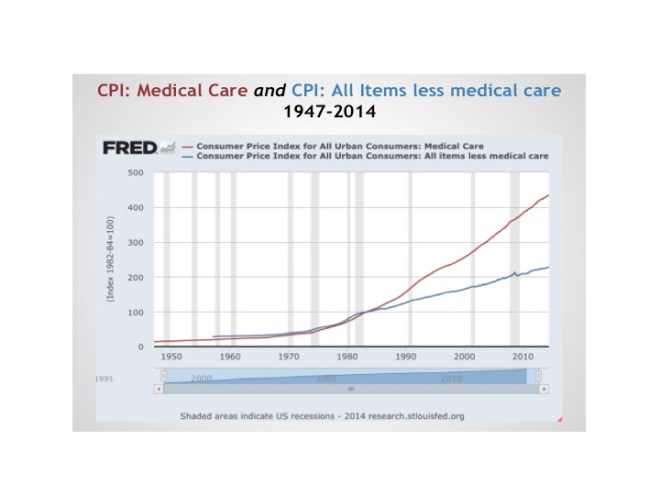
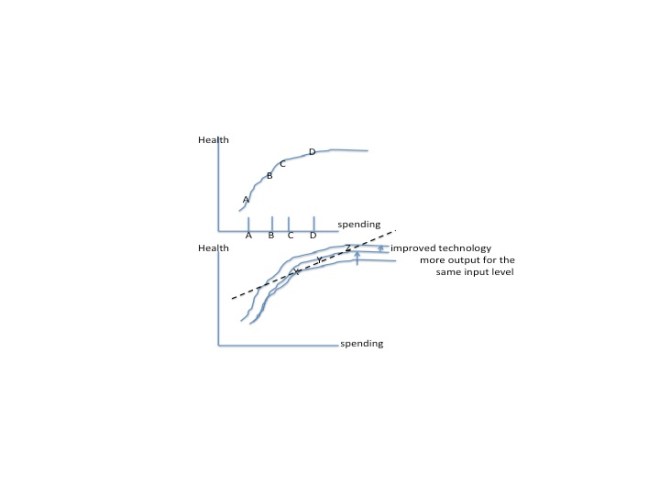
 

Literature on Impacts of Provider Payment in LMICs